Oh, how good and pleasant it is,
psalm 133:1
when brethren live together in unity!
book of common prayer
I “borrowed” the title of this post from Garrison Keillor (Life Among the Lutherans). However, this is not a stereotypical satire piece. If anything, my intent might be to dispel some of the myths and misunderstandings I had heard over the years about a people who worship in a denomination that shares many similarities with my Lutheran tradition.
In January of 2022 I received a telephone call from The Right Reverend Mark Hollingsworth, Bishop of the Episcopal Diocese of Ohio. Bishop Hollingsworth and I had become good friends and colleagues over my time as Bishop of the Northeastern Ohio Synod. We occasionally called each other to chat.
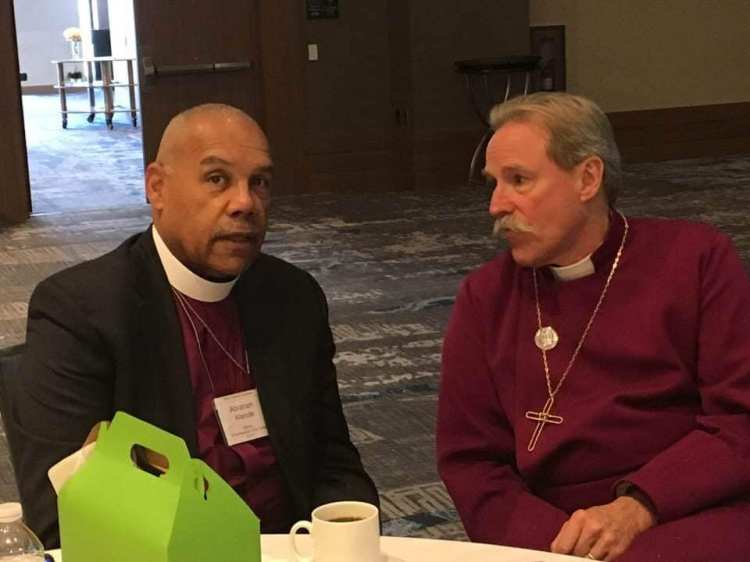
a break in the Diocesan Convention of 2016
When I was about to retire in 2020, I mentioned to him that if he ever saw an opportunity for me to serve in an Episcopal parish, I would welcome it. That way, I could keep doing what I loved and yet stay off the Lutheran radar. I reminded him again of that request when we saw each other at my successor’s installation. I hadn’t heard from him, and I thought the request had been forgotten.
That Monday afternoon in January, I was in Pittsburgh, where I was serving as Acting Bishop of the Southwestern Pennsylvania Synod. I eagerly picked up the phone thinking it was a social call. After exchanging pleasantries, his voice took on a somber tone. “Abraham, I need a pastor,” he said.
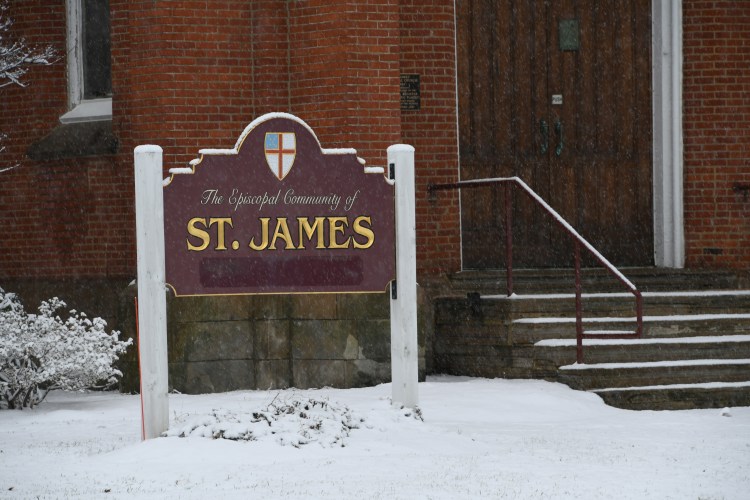
Noting the sudden change in his tone of voice, I somewhat hesitantly asked for more details. He mentioned that the parish was being served by an interim who had died suddenly a mere three days earlier. I stated that I would not be available for another month or so, to which he replied they would wait. And so, on the 15th of March 2022, the “Ides of March,” I began my relationship with the people of St. James Episcopal Church in Painesville.
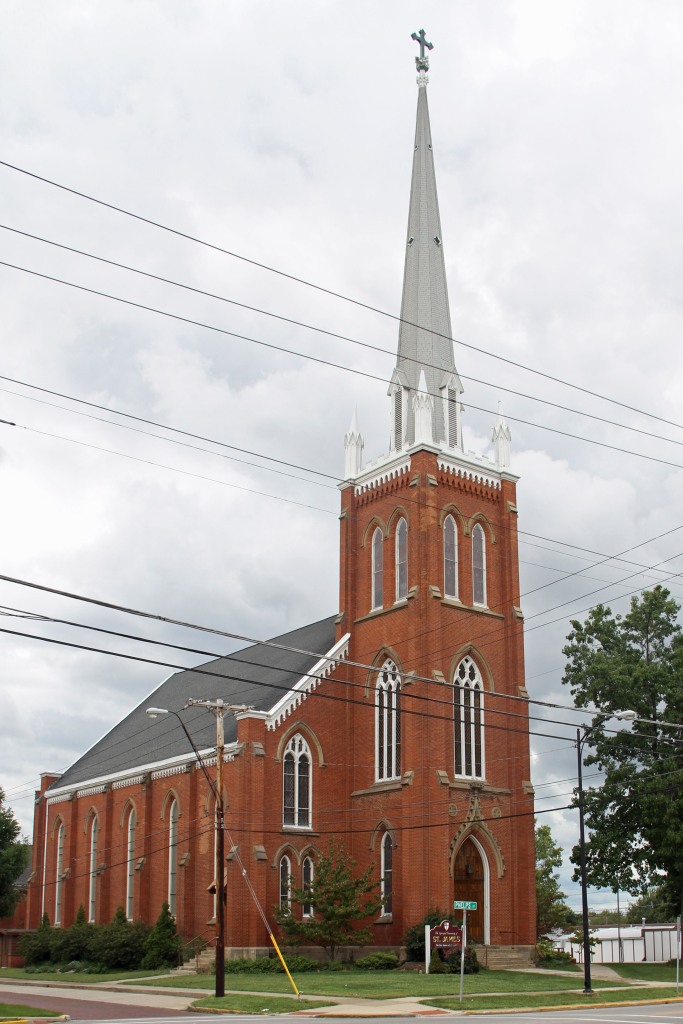
I was vaguely familiar with the congregation. I had served with their former Rector on the search committee for the Executive Director of the Ohio Council of Churches. After serving at St. James for a dozen years or so, she left in October of 2021 to become Dean of the Cathedral in the Diocese of Omaha. The Interim Rector began her service in November, and in January she died unexpectedly. For the congregation, the two changes in leadership in rather quick and abrupt fashion were somewhat jarring, to say the least. To add to the disruptions, there was also the struggle to regain some sense of normalcy as they were slowly emerging from the restrictions of a pandemic. Thus, I saw my role as that of any interim pastor, to keep the people focused on the mission and ministry of the church as I accompanied them through the transition.
On a personal level I chose to do all this on a half-time basis. I did not want to be away from my wife for the entire week, and Painesville is around 80 miles from my home in Canton. But the task of relationship building was not as difficult as I anticipated.
Initially, there were questions as to whether they could survive as a church. They had experienced the same setbacks that many mainline congregations today are facing – a decline in attendance, a community of worshippers that were older, and a shrinking budget. I would not go so far as to say I felt a sense of despair among them, but there was a palpable feeling of anguish. It had been, after all, more than a dozen years since they had gone through the search process and some doubted whether anyone would want to come to this parish.
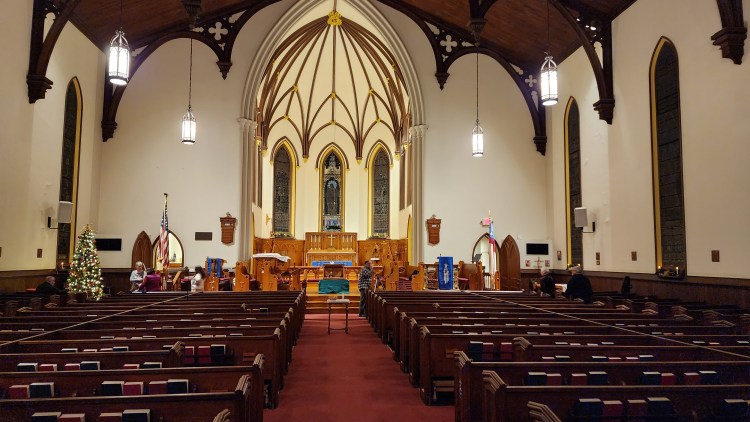
The recurring theme in many of the sermons I preached was one of hope and encouragement. I highlighted the strengths of their ministry, the things they did well. Above all, my principal goal was to help them rebuild their understanding of themselves as God’s people and to reassure them that God was walking alongside them on this journey. Sunday after Sunday, I told them that they were never alone, never ignored, never abandoned, and that God would act in their lives just as in the lives of all those who came before.
I never failed to mention the feeding ministry that has been a hallmark of their congregation for nearly 40 years. For four days a week, they, in collaboration with other churches, serve hot meals to people in the community. In a year, they average some 15-thousand meals served. Even throughout the pandemic, the feeding continued on a carryout basis. In my occasional conversations with the diners, I heard numerous expressions of appreciation for this wonderful ministry. Nowhere, I would tell them, was their reflection of God’s presence more evident than in this act of kindness and compassion. Of everything else that went on in this parish, this one expression of God’s love had the greatest impact on me.
The people of St. James were an easy group to grow to love. Being new to Episcopal worship, I had a lot to learn. Despite the similarities they share with our Lutheran liturgy, there were just enough differences that saw me fumble around the chancel like a bull in a china shop for a few weeks, especially at communion. But my occasional flubs made for some moments of humor; and their quickness to forgive helped to break down any sense of discomfort that may have existed between us.
They quickly dispelled whatever stereotypes I had heard for years – that Episcopalians were affluent, aristocratic, and aloof. Some of that comes, of course, from the British origins of the church. The faith of the founding fathers of this country was shaped, for the most part, by the Church of England. It was natural that they would continue to express their faith in the same manner. Adding to the perception of elitism is the fact that of this country’s 46 Presidents, 13 have been Episcopalians. Today, however, on a national level, the Episcopal Church is among the most liberal of church bodies.
The faithful that I encountered at St. James were, well…regular folks. You might even say “Blue Collar.” I saw a lot more social and economic diversity than I expected. They reminded me very much of the congregation I served in Maple Heights (The Lutheran Church of the Covenant) when I was active in full-time ministry. It took some time, but after a few months, the congregation that seemed at first shaken by events that were beyond their control eventually regained its sense of confidence and a renewed self-esteem that looked forward to the future in faith.
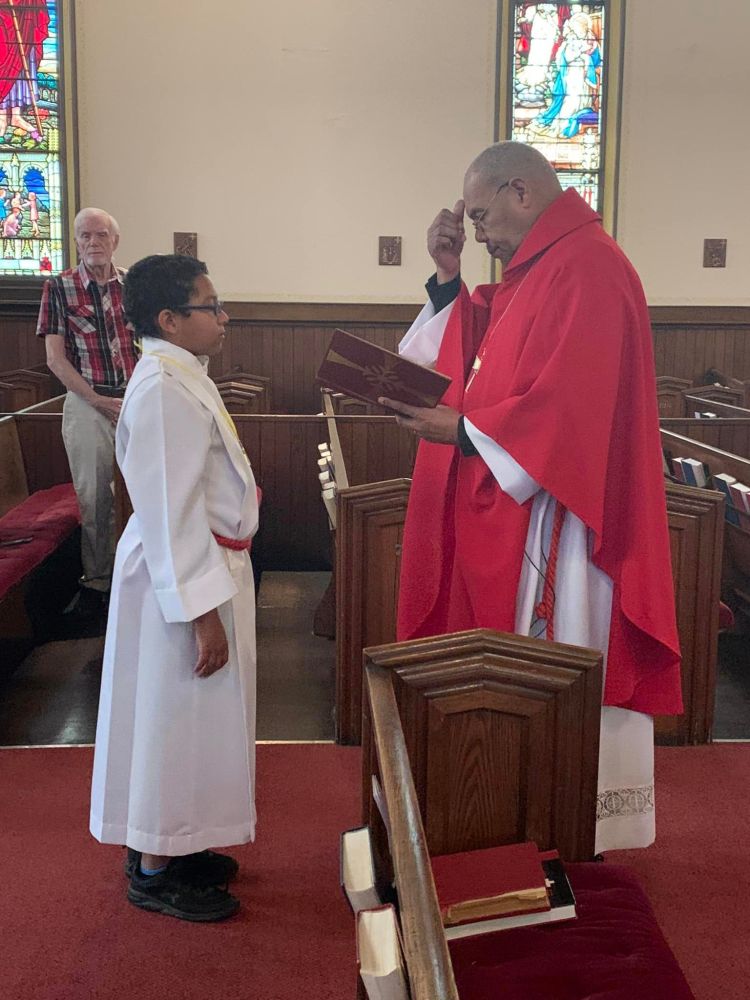
In May of 2023, the parish finally called a Rector. She began her service on July 30th. I resigned at the end of May in order to create some separation between my ministry and hers. The end of my 15 months among them was a bittersweet moment. As I said to them in my resignation letter, I developed many deep and lasting relationships with many, and left with only the fondest of memories. Together we did some transformative and worshipful work.
My final Sunday was Pentecost Sunday. It was appropriate that on the day the Christian Church celebrates the coming of the Holy Spirit, the people of St. James would begin preparing for the winds of change. I was grateful for my time among them. And even as I reflect back some three months after the fact, my heart is filled with gratitude that God entrusted me to care for God’s people at St. James.
It truly was a blessing.
 Walking Together in Faith