
The time is surely coming, says the Lord God,
amos 8:11
when I will send a famine on the land;
not a famine of bread, or a thirst for water,
but of hearing the words of the Lord.
Advent – Day 11
Wednesday, December 13
Amos 8:1-14
Revelation 1:17-2:7
Matthew 23:1-12
The daily readings are from the two-year daily lectionary as listed in the Book of Common Prayer, beginning on page 933.
The Sunday readings are from the Revised Common Lectionary, Year B.
I have tried to listen to the news less and less in the past few months.
Obviously, I have to listen, because my preaching and my writing have to try to make connections between faith and our circumstances.
I consider myself a positive person, one who intentionally tries to have a hopeful outlook on life.
But I confess that it’s hard.
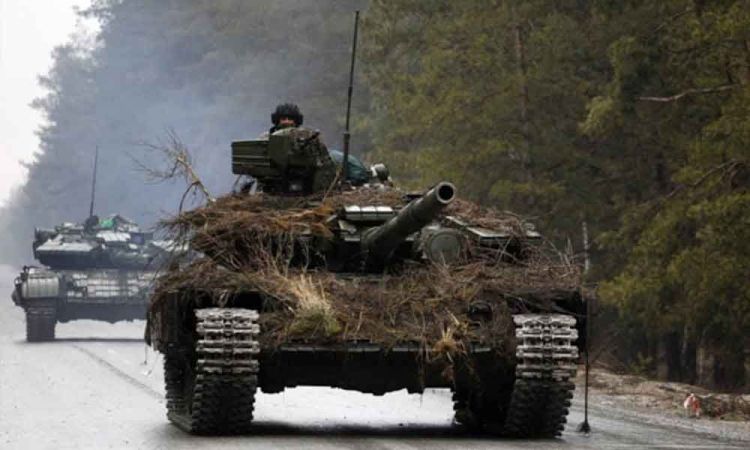
What is happening in the world and our nation can drive one to depression. There doesn’t seem to be anything positive happening.
Daily we hear of the escalating conflict in the Middle East, in Ukraine.
At home, we are overwhelmed with the melodrama of partisan bickering in our nation’s capital.
Nothing seems to get accomplished, and there appears to be no end in sight.
Our society is caught in a web of violence: record high incidences of mass shootings, we seem to be angry all the time. Although our economy is thriving, there are still too many people who lack food, housing, and health care.
As a hopeful person, I am inclined to distance myself from whiners. It makes no sense to mope all the time.
And after reading the Old Testament lesson for today, I can almost guarantee that if I lived in the time of the prophet Amos, I’d be among those that would run in the other direction the moment I saw him coming. Amos was anything but a bundle of joy.
Like most Old Testament prophets, he was sent by God to warn people of the consequences of disobeying God. Despite being God’s chosen people, the Israelites repeatedly turned away from God and dug themselves deeper into a hole of sin, all the while ignoring the warning signs placed before them by the prophets’ call for repentance.
The people in Amos’ day lived in prosperity. But that prosperity made them blind to the cries of the poor and vulnerable.
It’s almost too easy to hold up the events that are taking place in our own country and say that, in comparison to Israel in Amos’ time, not much has changed.
Walter Brueggemann made the following analogy:
“We live, I suppose, in a totalizing environment. The huge concentration of power and wealth in the hands of a small number of predators – reinforced by a government that is responsive to that concentration of wealth and power and very much legitimated by establishment religion – has created an environment that contains all the socio-economic possibilities and yields and ideology of conformity that is expressed as consumerism and supported by the mantras of militarism.”[1]
Walter Brueggemann. Truth Speaks to Power, p. 158
Notice that the church doesn’t escape criticism.
While I’m not quite ready to throw the church under the bus, I would alert us to Brueggemann’s warning.
While our hope is not lost, we discern a deteriorating sense of just how to define the future of Christianity.
So here’s what important to bear in mind. The mission and ministry of the church proclaims that we worship and proclaim a God of justice.
Therefore, let us connect our hope for the present and the future in Christ, because our mission as the baptized body of Christ is to strive for justice, and our ministry is with the vulnerable.
Let us pray:
Lord, give us grace to heed the warnings of the prophets and forsake our indifference to the cries of those in need, that we may, as your people and as your church, be the ones who offer hope, and bring healing and wholeness to the world. Amen
[1] Brueggemann, Walter. Truth Speaks to Power: The Countercultural Nature of Scripture (Louisville: Westminster John Knox Press) p. 158
 Walking Together in Faith