“My grace is sufficient for you,
[2 Corinthians 12:9-10]
for power is made perfect in weakness.”
So I will boast all the more gladly of my weaknesses,
so that the power of Christ may dwell in me.
While scrolling through Facebook on Tuesday morning I was reminded that eleven years ago, in 2014, I officially began my call as Bishop of the Northeastern Ohio Synod of the Evangelical Lutheran Church in America (ELCA) on September 2.
Unexpectedly elected as bishop in May of that year, Labor Day also fell on September 1, so the official start of my term was deferred by one day.
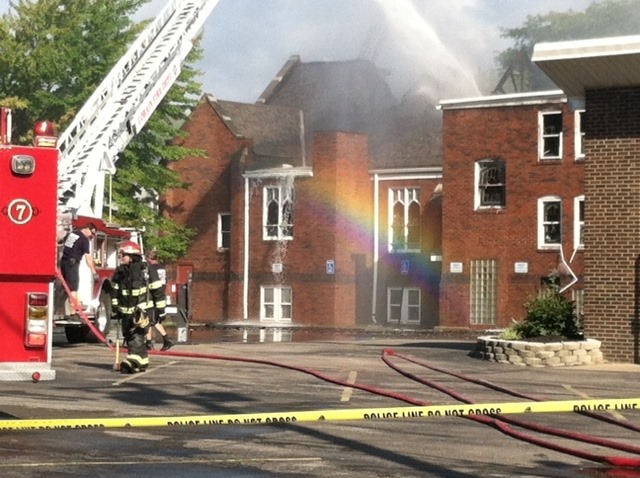
However, four days earlier, on August 28, I received word that one of our churches had burned to the ground as the result of arson.
That was, figuratively speaking, my baptism by fire.
Two months later, on November 8, one of our pastors suffered a heart attack and died.
I was present with that congregation the next morning, to preach and preside in his place; as well as two days later to preach and preside at his funeral.
On Christmas morning I was at the bedside of one of our younger pastors who was in the final stages of her life.
Three days later, on December 28, 2014, I was preaching at the final worship of a church in Youngstown, Ohio. After more than two hundred years of faithful ministry, this once vibrant community of faith had dwindled down to an average worship attendance of nine people. So closing was the most faithful decision they could have made.
So that’s how the first four months (exactly) of my ministry as bishop began.
I couldn’t imagine it could get much worse, but there was this little voice in my head that kept whispering, “But wait, there’s more!”
The big finish was yet to come in the form of the Coronavirus pandemic of 2020. At the suggestion of the Governor of the state of Ohio, all in-person worship was suspended. Pastors and congregational leaders looked to the bishop for guidance even though we were all going through this experience for the first time together.
But I’m getting ahead of my story.
As I look back on that time, I have to chuckle thinking that God was perhaps testing my resolve.
In his book, The Power of Vision, George Barna writes:
If you are like most ministers of the gospel, you occasionally have doubts as to whether God made a mistake allowing you to be in a position of leadership. Those doubts are valuable, for they keep you asking the types of questions that sharpen your skills and soften your heart. (p. 23)
If I had doubts on the morning of my election, they were deepened on the morning of the fire. I had no earthly idea about what to do in this situation. The office of bishop did not give me any magical powers to change the course of events. Incompetence does not begin to describe how I felt at that moment.

But I worshipped with the congregation that Sunday, August 31 – outdoors in the shadow of the charred building.
And I learned one of the most powerful lessons I could have ever learned that morning. Call it the ministry of accompaniment or the ministry of presence, ninety percent of success depends on just showing up.
I was simply there. I said a few words and the people were grateful for my being there.
The idea of just showing up is attributed to comedian, actor, and playwright Woody Allen, but it has become a hallmark of my ministry.
I’ve lost track of the number of places where I’ve simply been there, feeling inadequate, unprepared, not knowing what to say or do. But the mere sight of me has been a sign of comfort or support to someone in need.
The ministry of presence was instilled in me during my internship, the year a Lutheran seminarian spends under the supervision of an ordained pastor.
I remember calling a member of the congregation to find out what time her husband was having a minor procedure done at one of the local hospitals. She responded, “Oh, you don’t need to go. He’s only going to be there a couple of hours.”
When I related this to my supervising pastor, he snapped, “You GO! Don’t listen to her – GO!”
Point taken.
I showed up at the hospital waiting room and they were overjoyed to see me. It was the most important lesson I learned about pastoral care. Always show up.
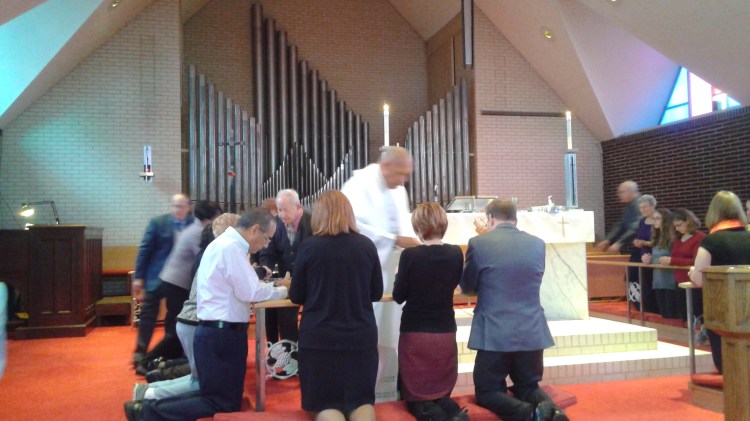
When I was in full-time active parish ministry, during Advent and Lent, I made a concerted effort to visit every homebound person or family to take them home communion. It was a blessing to me to get to know so many people who, because of poor health or critical illness, would probably never again be in church on Sunday, but felt so deeply loved because their pastor cared enough to visit them.
However, as bishop, that close personal relationship I had with parishioners was lost. In so many instances, instead of a pastor, I felt more like a rescue worker, or a firefighter. More often than not, my role was focused on resolving conflicts or imposing discipline.
Only on Sundays, when I regularly made parish visitations, did I feel a sense of joy at being with the people of God at a time of celebration.
And I made no secret of it.
I would preface every sermon I preached in a parish with a variation of the following:
I find these moments life-giving and enriching to this ministry to which Christ has called me. Everything that I do for the rest of the week flows out of my worship experience, no matter where it happens. I tell anyone who will listen that were it not for Sundays and the delight of being among God’s people in praise and worship, my vocation would be sheer drudgery.
In the chapter from Second Corinthians from which I pulled the verses that began this writing, the apostle Paul tells of a thorn in the flesh that was a source of torment to him in his ministry. There is no clear scholarly consensus as to the nature of this thorn. Opinions range from a physical ailment to opposition to his mission.
What we do know is that he suffered shipwrecks, beatings, imprisonment, and insults. But instead of discouraging him, the challenges gave Paul a means through which he came to love and care for his church.
I began with a fire and ended with a pandemic.
Compared to what Paul encountered, a fire, church closings, and a pandemic are much lighter burdens to bear. God’s grace has definitely been made perfect in weakness.
And I am so grateful for the interim ministry that I’ve been engaged in over the past three years. It has more than replenished that void that I felt during my six years in office.
I’ve shared my feelings with friends, but I don’t think I’ve ever made such a declaration as publicly as I’ve done in this reflection. What I now lament is having to step away grudgingly as I yield to the aches and pains of the aging process.
But as I look back on this time, especially on this day, I thank God for having allowed me to serve God’s people in various and diverse ways and for blessing me with rich and abundant relationships that I will forever treasure.
 Walking Together in Faith