
How shall we sing the LORD’S song
[PSALM 137:4 BCP]
upon an alien soil?
Monday, September 15, began the month-long celebration of Hispanic Heritage in the United States.
My wife and I have already taken part in two celebrations so far in 2025.
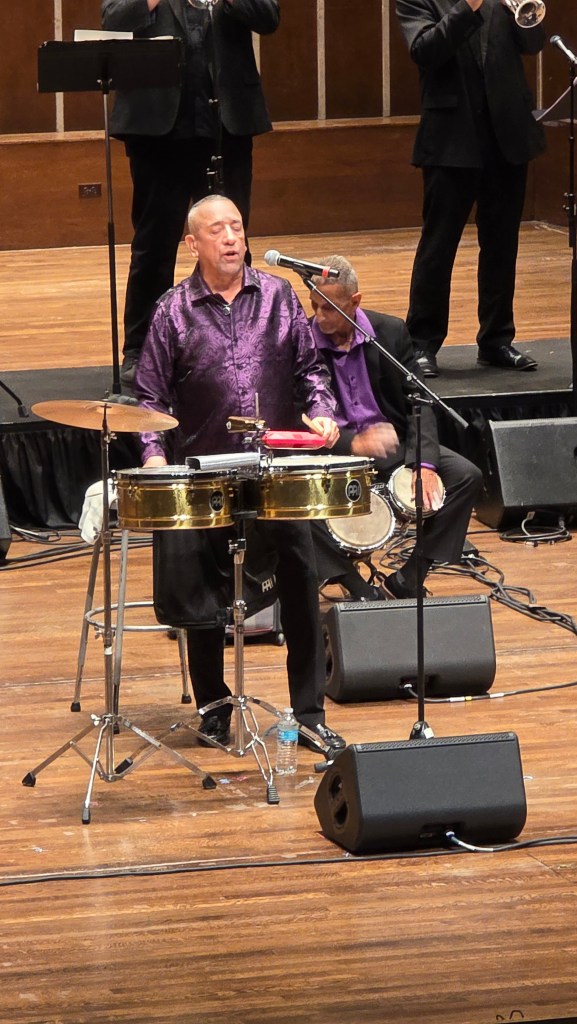
Saturday night we were at Severance Music Center in Cleveland for the Hispanic Heritage Month Celebration Concert that featured the Sammy De Leon Orquesta, as well as some classical pieces that were composed by Latino musicians.
The evening, filled with loud and festive salsa music, was a joyful contrast to the staid, solemn atmosphere that generally characterizes Severance when the Cleveland Orchestra performs. The orchestra’s regular patrons don’t usually dance in the aisles to Bach, Beethoven, or Mozart.
I lived in Cleveland for a quarter century and was actively involved in the Latino community for many years. So this evening was a homecoming of sorts for me. It was a thrill to reconnect with old and dear friends whom I hadn’t seen for quite a while and reminisce about the challenging but fun times we shared.
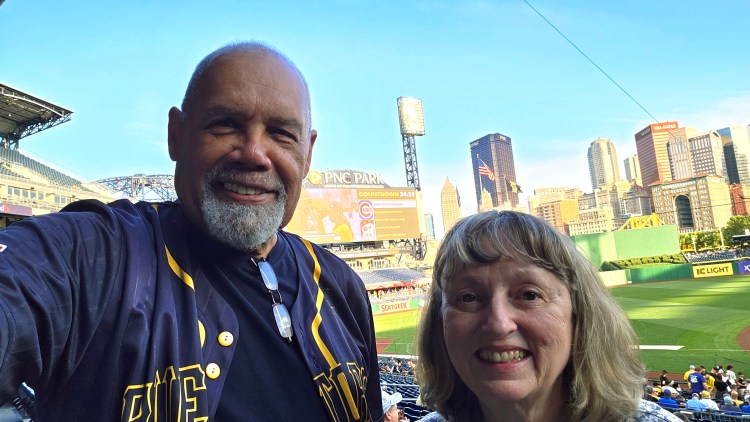
Monday, Linda and I made the two-hour trek to Pittsburgh to watch a baseball game at PNC Park, home of the Pittsburgh Pirates. The team celebrated not only Hispanic Heritage, but combined it with the recognition of the legendary Roberto Clemente, one of its most outstanding players who hails from Puerto Rico. Clemente was an excellent athlete, and an even greater humanitarian.

1934-1972
Puerto Rico also happens to be where I was born and where baseball is almost like a second religion. When I was seven years old my family left the island and moved to southwestern Pennsylvania. So it was only natural that when Clemente first donned a Pirates uniform in April of 1955, my father and I became fervent Pirates fans.
Although I’ve been to PNC Park several times this year already, It was heartwarming on this night to see all Pirates players and countless numbers of fans in the stands wearing jerseys with the number 21, the number Clemente proudly wore.
It was also fascinating to hear Spanish spoken around me – in Pittsburgh! This was something unimaginable back when I was a youngster.
Yet despite these two celebratory occasions, Hispanic Heritage festivities throughout the country this month will be subdued.
There is an overarching climate of fear in all Latino communities, as the following Associated Press article points out:
This year, the Trump administration’s immigration crackdowns, a federally led English-only initiative and an anti-diversity, equity and inclusion push have changed the national climate in which these celebrations occur. Organizers across the country, from Massachusetts and North Carolina to California and Washington state, have postponed or canceled heritage month festivals altogether.
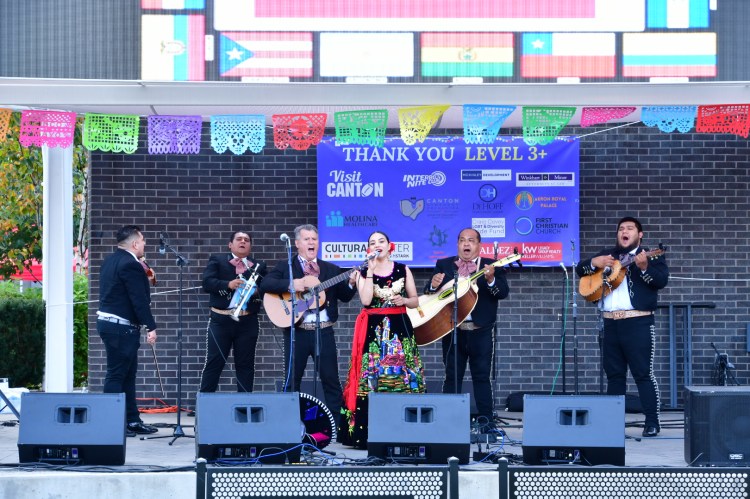
In Canton, where I live, the Canton Latino Fest, which was in its fourth year, was canceled back in May because of the fear gripping the community.
At Saturday night’s celebration in Cleveland there was and underlying tension and concern that Immigration and Customs Enforcement (ICE) might make an appearance.
This shouldn’t happen in a nation that is the second largest Spanish-speaking country in the world and where 68-million people identify as ethnically Hispanic.
But it does!
Elected officials have preyed on our fear of the other by demonizing those who are different in order to score cheap political points and remain in office.
Sadly, it is a tactic repeated throughout all of history. People are unable or unwilling to see those who are different from them as their equal, much less, as human.
It is sad, also, because celebrations that highlight a culture are excellent opportunities to expand our knowledge of others through music, sports, and food. I can’t think of a more wonderful way to bridge the divide between cultures and learn that we are more alike than we are different.
I confess that I grow increasingly irritated to the point of exhaustion in debating with those who want to explain their stance on immigration by distinguishing between those who are here legally and those who are not.
How can you tell? Do they somehow look as if they shouldn’t be in this country?
No matter where one is born, everyone deserves to live without fear of judgment because of their looks, or the accent with which they speak, or that at any moment they will be stopped on the street, deported to who knows where, and their family will be torn apart as a result.
Those of us who serve or have served immigrant populations are mindful that Scripture is filled with stories of one nation’s oppression over another and the suffering of those oppressed.
The psalm at the beginning of this reflection, for example, is a lament of the Judeans shortly after their experience of deportation and exile following their defeat at the hands of the Babylonians back in the sixth century BCE.
By the waters of Babylon we sat down and wept,
when we remembered you, O Zion.As for our harps, we hung them up
on the trees in the midst of that land.For those who led us away captive asked us for a song,
and our oppressors called for mirth:
“Sing us one of the songs of Zion.”Psalm 137:1-3
And yet, despite these stories of cruelty, scripture invariably calls us to welcome.
In his book, The Bible and Borders, professor and longtime advocate for immigration, M. Daniel Carroll Rodas, points out that hospitality was a widespread cultural ethic practice throughout the Ancient Near East. [M. Daniel Carroll R., The Bible and Borders, p.53]
God constantly reminded God’s chosen people, Israel, that they were once strangers in the land of Egypt, and calls them to show hospitality to strangers, because they knew how it felt to be unwelcomed. [Deuteronomy 10:19, Leviticus 19:33-34]
My prayer is that we, as God’s people, more intentionally engage in the study of scripture to learn what God in Jesus Christ has to teach us so that we can allow it to shape us and our communities as more loving, compassionate, and welcoming.
To that end, I close with the final sentence from Carroll’s book, with which I could not agree more: “May God grant us the wisdom and discernment to fulfill that call faithfully.” [p. 119]
 Walking Together in Faith