
“Caminante, son tus huellas
[ANTONIO MACHADO]
el camino y nada más;
Caminante, no hay camino,
se hace camino al andar.”
“Traveler, your footprints
are the only road, nothing else.
Traveler, there is no road;
you make your own path as you walk.”
I was blessed to be in Pittsburgh on Saturday, October 18, to witness the joyous celebration of the installation of the Rev. Melissa Larson Stoller as the Third Bishop of the Southwestern Pennsylvania Synod of the Evangelical Lutheran Church in America (ELCA).
The visit also gave me the opportunity to congratulate the Rev. Yehiel Curry, in person, on his election as Presiding Bishop of the ELCA.
It was a reunion and homecoming of sorts for me.
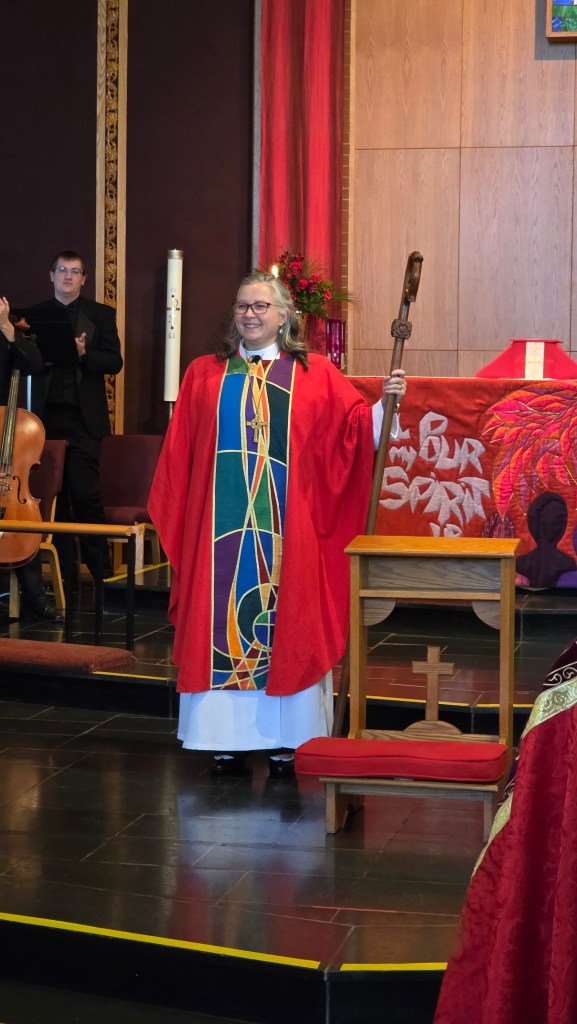
I grew up in Southwestern Pennsylvania and, in 2022, served as Acting Bishop of the SWPA Synod for two months while former Bishop Kurt Kusserow was on sabbatical. In those days, Pastor Stoller was serving on the synod staff as the Director for Evangelical Mission. When we were formally introduced back then, she described herself as the “dreamer” and “agitator” on the staff to some extent. Those qualities will serve her well in her new and much more demanding role.
Having walked in her shoes, I am highly aware of the challenges a new bishop faces, regardless of how smoothly the organization functioned before.
Heraclitus, the Greek philosopher, once said, “No [person] ever steps into the same river twice, for it’s not the same river and (s)he is not the same [person].”
That counsel is well worth holding closely, no matter how confidently one steps into another position.
The church is in a constant state of change. Society is in a constant state of change. Our own personal and family dynamics are in a constant state of change.
Our response to those changes is what matters greatly and what determines the outcome.
I will hold Bishop Stoller in prayer daily.
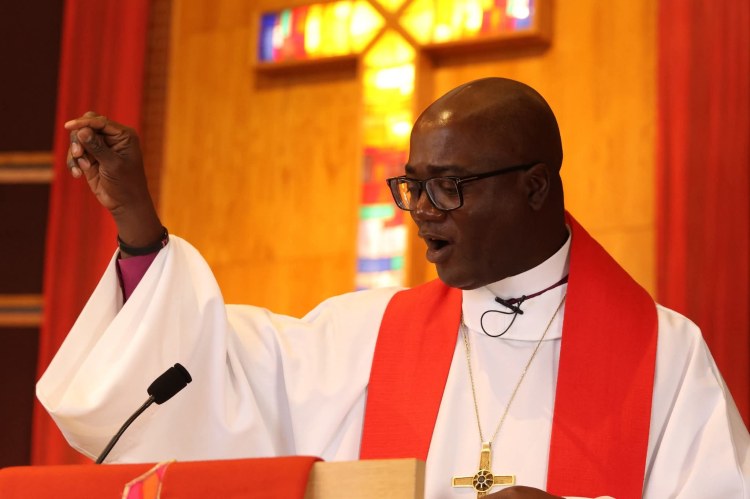
I will also pray daily for Bishop Curry, as I have been for the past seven years.
One of the groups that I pray for daily is the bishops of color in the ELCA.
Of the sixty-six bishops in the ELCA, only six are people of color – three are African-American and three are Latinx.
The Presiding Bishop is one of them.
It’s not an overstatement to say that Bishop Curry’s election as Presiding Bishop in August of this year sent shock waves throughout the church. The ELCA is considered the whitest denomination in the United States, so it is a monumental achievement to have an African-American person as the spiritual leader of the ecclesiastical body.
The news made headlines in all corners of this country.
Even though the Episcopal Church had already broken this ground several years earlier, having elected another Bishop Curry (Michael) as its Presiding Bishop, Lutherans in the United States do not have a reputation as open to diversity as the Episcopal Church.
Worldwide, Lutherans of color far outnumber Lutherans in the United States, yet the ELCA remains deeply entrenched in its German and Northern European roots, despite its best efforts to diversify.
Will Bishop Curry’s election change that?
His sermon at Bishop Stoller’s installation was based on the Gospel lesson from the 10th chapter of Luke in which Jesus sent out seventy-two of his followers on a missionary journey.
He told the story of a young man who took a job as director of a Lutheran summer camp but neglected to follow the advice of the Board Chairperson who hired him.
That advice was to walk from his director’s quarters to the camp daily.
After six months the director received a positive review with one exception. The Board Chair was troubled that he had not been walking to the camp each day.
The director wondered how she knew. She pointed out to him that the grass was smooth over where the path should have been. It was important for campers to see that others had walked this path before them.
The story was a metaphor for our life of faith. He pointed out that the early Christians were known as people of The Way. They walked a path, and it was their presence among the people they met as they walked that made the difference.
In essence – and this is my summary interpretation – relationships matter.
All of us are sent, as were the seventy-two and others who have gone before us, to walk the path that Jesus walked and to show others the way.
It is not just up to the bishop, but to all of us to live what we say we believe, to embody the love of Jesus and give to others the gift that we were given.
As Bishop Curry preached, a poem by the Spanish poet Antonio Machado kept going through my mind. The first verse begins this reflection.
In essence, the poem points out that as a person walks a new path, he or she creates one’s own destiny.
Another thought that crossed my mind was that this sermon was as much for Bishop Curry as it was for Bishop Stoller.
Both are new in their positions. Both will face challenges of varying magnitudes while at the same time charting new paths. Both will need our support and our prayers.
Bishop Stoller is the first woman to occupy the bishop’s chair in Southwestern Pennsylvania. Both of her predecessors were men, and both served three six-year terms. That’s thirty-six years of history and stability. The scale of this change cannot be taken lightly.
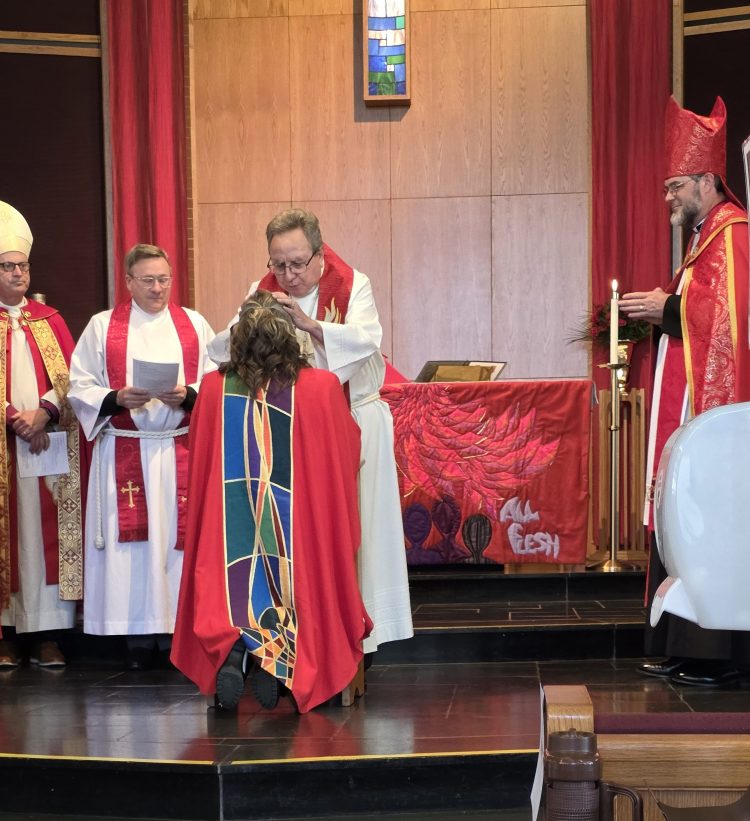
Bishop Emeritus Donald McCoid lays hands on Bishop Stoller. 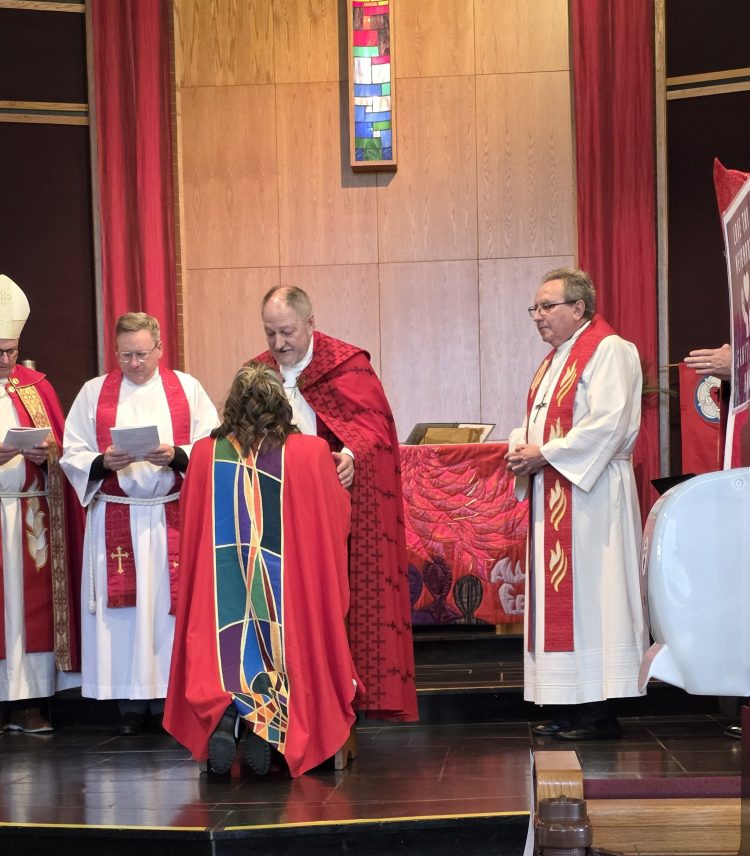
Bishop Emeritus Kurt Kusserow lays hands on Bishop Stoller 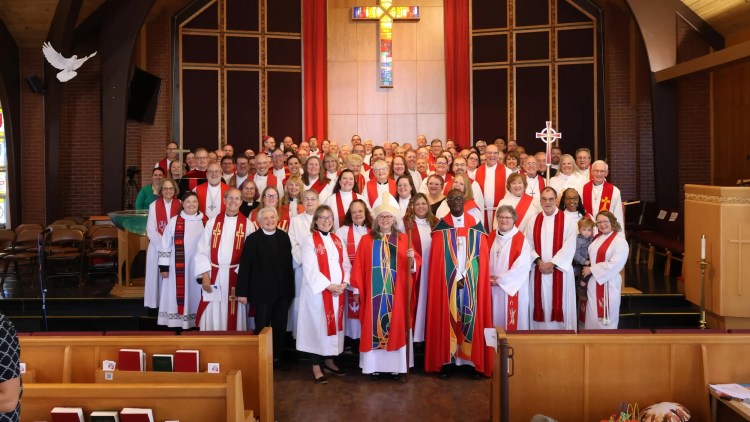
All clergy at Bishop Stoller’s Installation. 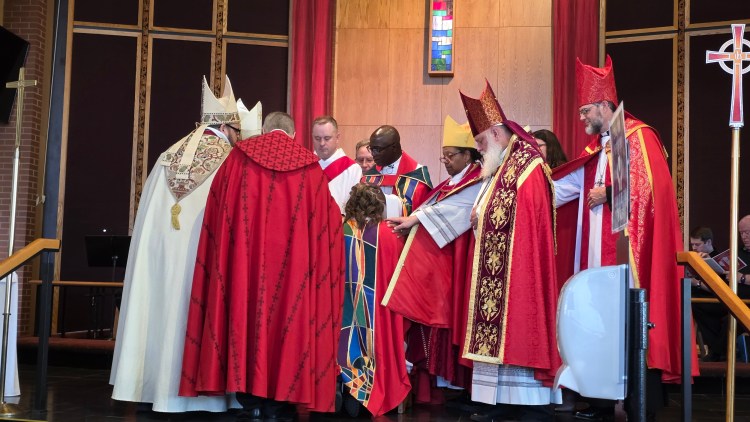
The bishops and ecumenical partners lay hands on the Rev. Stoller. 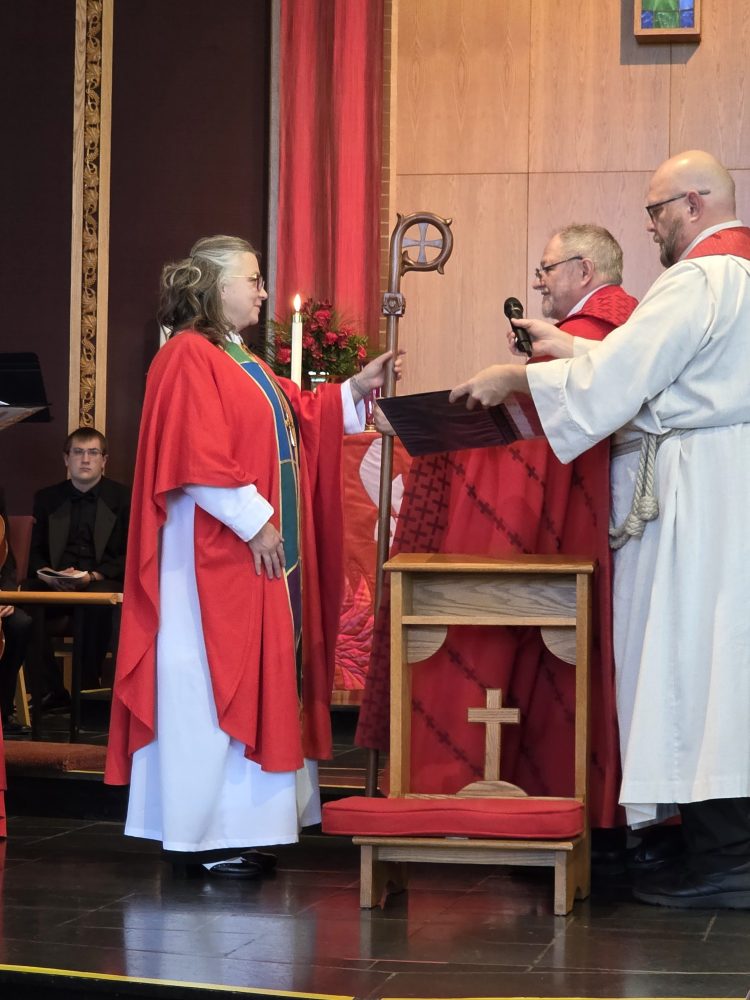
Bishop Emeritus Kurt Kusserow presents the crozier (staff) to the new bishop. 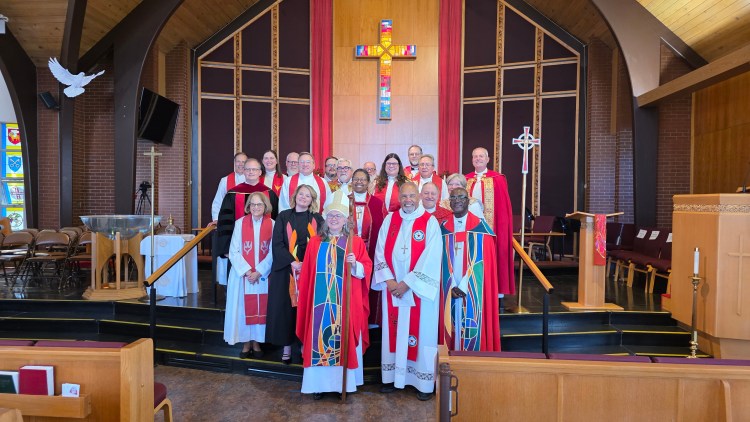
Current and former bishops and ecumenical partners together with Bishop Stoller.
It is to her advantage that she is a known commodity and well-liked in Southwestern Pennsylvania. She knows the workings of the office, having served as Assistant to the Bishop for seven years. In the brief time I served alongside her, I valued her work ethic, her skill sets, and, above all, her faith.
Nevertheless, she is stepping into different waters, to borrow from my earlier image. Any change, no matter how slight, will be unsettling to some.
Bishop Curry also brings an abundance of gifts to the office. A former educator, he was elected twice as Bishop of the Metro Chicago Synod, and twice to the Chair of the Conference of Bishops. So, his leadership qualities are undisputed.
However, Bishop Curry is stepping onto a much larger stage, under much brighter lights, and will no doubt face a much greater scrutiny.
D.C.-based journalist Khalilah Archie, in an article for Black Entertainment Television (BET.com), raised all the pertinent questions that surround Curry’s election.
Black leaders in white religious spaces often shoulder a dual burden — representing diversity while navigating structures that resist deep change. They’re expected to “fix” representation without making anyone uncomfortable. It’s a balancing act between prophetic truth-telling and political diplomacy.
Will the denomination address racial disparities in leadership pipelines? Will it make room for Black worship traditions and cultural expression? Will it confront the implicit bias that still shapes who feels welcome in the pews?
For these reasons I will pray for him every day, and I encourage anyone reading this to join me in that task. Let us loudly and forcefully raise our petitions to God and surround Bishop Curry with all of our support, so that – to borrow a phrase from the letter to the Hebrews – “he may run with perseverance the race that is set before him, looking to Jesus, the pioneer and perfecter of faith.” (Hebrews 12:1-2)
 Walking Together in Faith