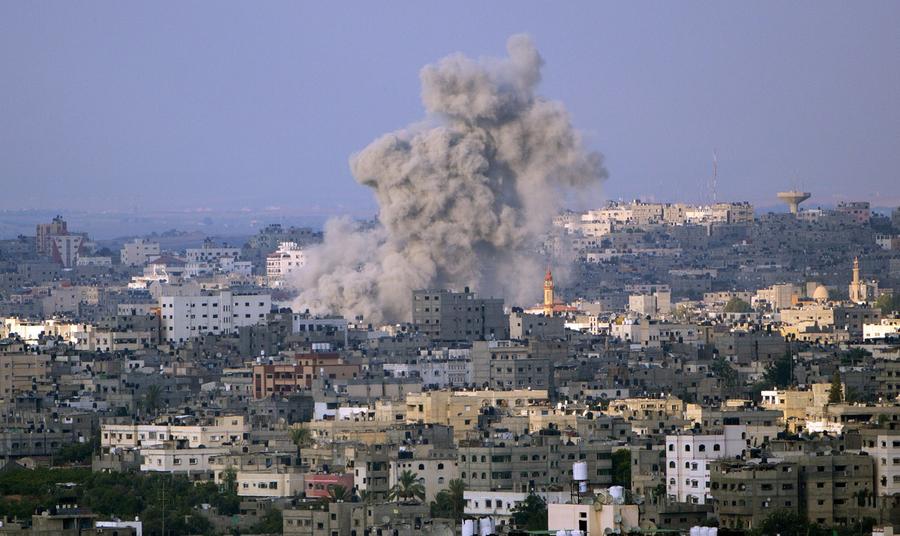
Why are the nations in an uproar? *
[PSALM 2:1-2]
Why do the peoples mutter empty threats?
Why do the kings of the earth rise up in revolt,
and the princes plot together, *
against the LORD and against his Anointed?
| ADVENT DAILY OFFICE READINGS |
|---|
| AM Psalm 1, 2, 3; PM Psalm 4, 7 Amos 2:6-16; 2 Pet. 1:1-11; Matt. 21:1-11 |
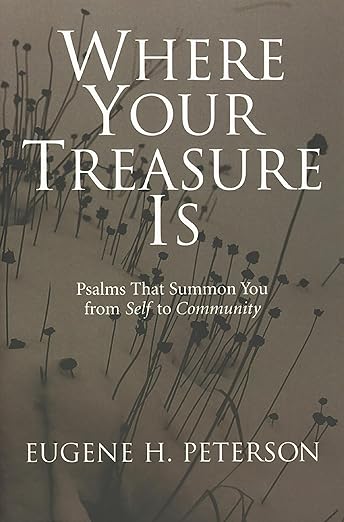
For today’s reflection I am relying tremendously on the wisdom of Eugene Peterson, and his book, Where Your Treasure Is, Psalms That Summon You from Self to Community. [Grand Rapids: Eerdmans, 1993]
A direct quote from the author’s preface was all I needed to dive into it.
I have written a book for Christians who want to do something about what is wrong with America and want to plunge into the center, not tinker at the edge. I have chosen eleven psalms that shaped the politics of Israel and can shape the politics of America, and I have taken them seriously in the way that they were intended to be taken seriously, as prayers that shape national life. (Peterson, p. ix)
Though it’s only 180 pages, it is anything but a quick read.
As noted, it analyzes a mere eleven psalms. Yet one would be best served by reading slowly and absorb each paragraph, phrase, and sentence with care.
Peterson recommends that the book be read in community with a few friends who will commit to gathering weekly for a couple of hours to read and discuss each psalm and the accompanying essay.
It’s a great idea which I obviously haven’t done.
Before you assume that this is a book critical of the current presidential administration, note its publishing date – 1993!
And this is the second edition. The original was published in 1985.
That was way before the current occupant of the White House was even a gleam on the landscape of the present chaos in which we are living.
But it is that very chaos that drew me to the book in hopes that it would help me make sense of it all.
So, what does this book have to do with today’s psalm selection?
Read the opening verses once again.
Peterson points out that Psalm 2 offers, in his words, “a wide-angle lens on politics.”
The term “politics,” is derived from the medieval Latin and Greek, meaning “public matters, civic affairs.”
And I may be oversimplifying things here, but this psalm suggests to me that those public matters and civic affairs often stand in direct contrast to the Word of God.
Today’s reading from Amos points out in graphic detail how much our Israel’s ways displeased God.
In several instances God, speaking through the prophet, points out the people’s wrongdoing and rejection of the law of the LORD:
they sell the righteous for silver,
and the needy for a pair of sandals—
they who trample the head of the poor into the dust of the earth,
and push the afflicted out of the way…
(Amos 6b-7a)
We are also reminded of the striking differences between our finite way of thinking and God’s thoughts in one of our morning canticles from Isaiah:
let the wicked forsake their way,
and the unrighteous their thoughts;
let them return to the Lord, that he may have mercy on them,
and to our God, for he will abundantly pardon.
For my thoughts are not your thoughts,
nor are your ways my ways, says the Lord.
For as the heavens are higher than the earth,
so are my ways higher than your ways
and my thoughts than your thoughts.
(Isaiah 55:7-9)
How can we as people of God align ourselves more with God’s purpose and mission on earth?
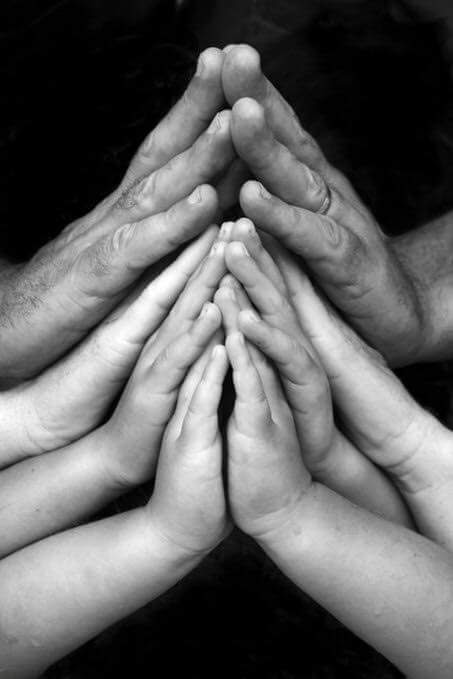
Peterson’s solution is simple – prayer.
When anyone suggests prayer as a solution, I am immediately reminded of one of my favorite quotes from Swiss theologian Karl Barth:
“To clasp the hands in prayer is the beginning of an uprising against the disorder of the world.”
Peterson puts it in tamer terms, saying that:
Prayer is a repair and a healing of the interconnections. It drives to the source of the divisions between the holy and the world – the ungodded self – and pursues healing to its end, settling for nothing less than the promised new heaven and new earth. “Our citizenship is in heaven,” say those who pray, and they are ardent in pursuing the prizes of that place.
[Where Your Treasure Is, p. 15]
At this point it’s important to point out that the psalms themselves are prayers. The psalter is often referred to as the prayer book of Jesus. Therefore, if prayer is not a habit you practice daily, reading psalm daily might be a worthwhile place to start.
Over the course of these Advent reflections, we will come back to the practice of prayer repeatedly. Each individual prays according to his or her custom and tradition, so, naturally, prayer takes on many forms. One connects to God in the way that is most meaningful for him or her.
In this season of Advent, we prayerfully wait for the coming Messiah. That prayerful waiting is a metaphor for that longing we have for peace in our nation and our world – a peace that surpasses all understanding but doesn’t discourage us from striving to make it a reality.
Let us pray:
Almighty God our heavenly Father, guide the nations of the world into the way of justice and truth, and establish among them that peace which is the fruit of righteousness, that they may become the kingdom of our Lord and Savior Jesus Christ.
Amen.
(Book of Common Prayer, p. 816)
 Walking Together in Faith