I love you, O Lord my strength,
[PSALM 18:1-3]
O Lord my stronghold, my crag, and my haven.
My God, my rock in whom I put my trust,
my shield, the horn of my salvation, and my refuge;
you are worthy of praise.
I will call upon the Lord,
and so shall I be saved from my enemies.
| ADVENT DAILY OFFICE READINGS |
|---|
| AM Psalm 18:1-20; PM Psalm 18:21-50 Amos 4:6-13; 2 Pet. 3:11-18; Matt. 21:33-46 |
My intention in focusing on the psalms this Advent season is not to analyze them, but to reflect on them.
However, every so often, analysis is necessary. Context matters.
As is generally known, many of the psalms are attributed to King David. He wrote them in reaction or response to something that was going on during his life and his reign over Israel. We can usually find those events in the historical books of the Old Testament, primarily First and Second Samuel, and elsewhere.
Psalm 18, our reading for today, is essentially borrowed almost entirely from Chapter 22 of 2 Samuel. In my version of the Bible the heading for that chapter is titled “David’s Song of Thanksgiving.”
The psalm, therefore, is likewise a psalm of gratitude in which David is thankful to God for having watched over and protected him throughout his life.
The first three verses (see above) set the tone for the rest of the psalm, which goes on for fifty verses, the third longest in the psalter.
It almost goes without saying that David is the most revered king in Israel’s history. But he was also a flawed individual. To borrow a description from the late Fred Buechner, “He had feet of clay like the rest of us, if not more so – self-serving and deceitful, lustful and vain…” (Peculiar Treasures, a Biblical Who’s Who, p. 27)[i]
We are all human. Our lives are a series of successes and failures, virtues and vices.
Those of us who worship in a liturgical tradition admit that each time we confess our sins in our worship services.
Most merciful God,
we confess that we have sinned against you in thought, word, and deed,
by what we have done, and by what we have left undone.
(Book of Common Prayer, p. 79)
Thankfully, however, we serve a God of grace, who forgives all our sins and cleanses us from all unrighteousness. (1 John 1:9)
I can’t help but read Psalm 18 and compare it to the practice many of us take on each December of writing Christmas newsletters to our friends and loved ones as a way of staying connected.
We highlight those significant events and achievements that our families have celebrated over the past eleven months. We tend to embellish the favorable ones and downplay those that put us in a bad light. In other words, we put the best construct on our year.
It would not be a stretch to suggest using Psalm 18 as a template for that annual newsletter.
This has been a year full of change. Change which some of us have had a hard time dealing with.
If you’re looking for hope in spite of the impediments, there is plenty in this psalm to chew on. The following two verses are but a small sampling of the hopefulness that expresses our trust in God:
You, O LORD, are my lamp;
my God, you make my darkness bright.
With you I will break down an enclosure;
with the help of my God I will scale any wall.
(v. 29-30)
As with David, amidst life’s uncertainties, the source of our strength is our trust in God’s promises.
Let us pray:
O God, you manifest in your servants the signs of your presence: Send forth upon us the spirit of love, that in companionship with one another your abounding grace may increase among us; through Jesus Christ our Lord. Amen.
(BCP, p. 230-231)
[i] Buechner, Frederick. PECULIAR TREASURES: A Biblical Who’s Who. (New Yok: Harper Collins Publishers, 1979.)
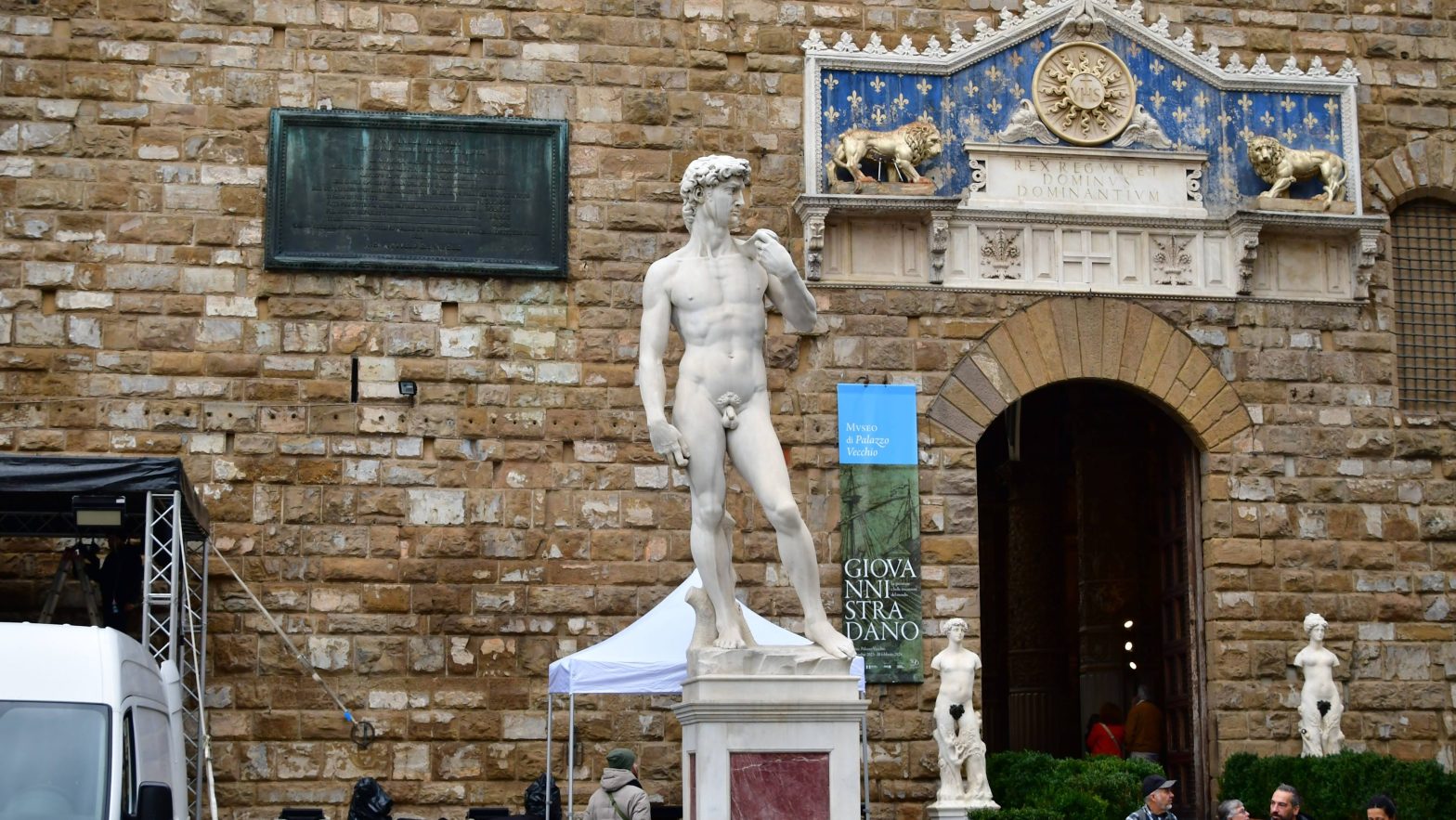
Featured Image: Statue of David outside Palazzo Vecchio, Florence Italy (Personal photo)
 Walking Together in Faith