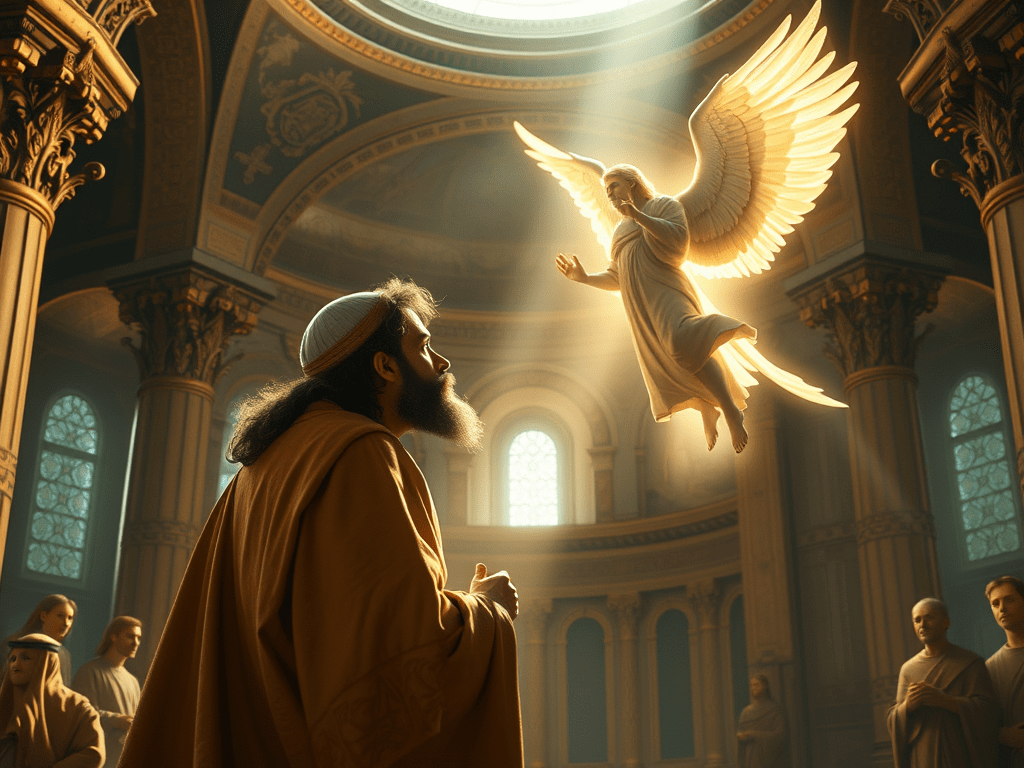
For God alone my soul in silence waits;
[PSALM 62:1, 6]
from him comes my salvation.
For God alone my soul in silence waits;
truly, my hope is in him.
| ADVENT DAILY OFFICE READINGS |
|---|
| AM Psalm 61, 62; PM Psalm 112, 115 Zeph. 3:14-20; Titus 1:1-16; Luke 1:1-25 |
This is the Monday of the fourth week of Advent.
In just two more days people will gather in churches all over the world to celebrate the birth of Jesus, the Savior of the world.
As I scroll through my social media sites, I am deluged with photos of all the parishes buzzing with pre-Christmas activity; the greening of the church, Advent Lessons and Carols, Blue Christmas services, Children’s Christmas plays, live Nativities, and countless luncheons and dinners.
As an aside, I’m pleased that the term “Hanging of the Greens” has gone out of use. I’ve always wondered what grave offense the Greens committed that the deserved to be hanged. (I’m joking, of course!)
Every once in a while the question of Advent’s significance pops into my mind. It seems that we are so busy preparing for Christmas that the idea of Advent being a time of waiting is lost.
As a society, we are a beehive of activity.
As communities of faith, we are even worse.
We cram more and more events into these four weeks with fewer people to plan or take part in them as if somehow the busyness is going to bring back those who have long ago lost interest in the life of the church.
Two verses in Psalm 62 caught my attention. They became the focus of today’s reflection.
Interestingly, this psalm is paired with the Gospel reading for today, Luke’s account of the birth of John the Baptist.
I would encourage you to read the lesson by clicking HERE.
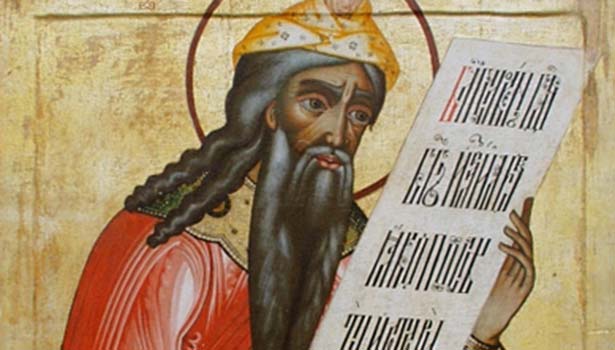
Russian Icon Early 18th Century
But to give a brief summary, Zechariah is a priest who is married to Elizabeth. Both are old and childless.
Zechariah enters the Temple to engage in that once in a lifetime act of a priest in Israel’s life of making the incense offering in the holy of holies to God.
Gabriel, an angel of the Lord, appeared to him, and naturally, Zechariah is scared out of his mind. Gabriel says what angels often say in the Scriptures, “Do not be afraid, Zechariah, for your prayer has been heard. Your wife Elizabeth will bear you a son, and you will name him John.”
Of course, Zechariah wants proof. “How will I know that this is so,” he asks? “For I am an old man, and my wife is getting on in years.”
Gabriel doesn’t seem to have much patience for doubters, so he was determined to have the last word in this discussion.
“I have been sent to speak to you and to bring you this good news,” he tells Zechariah. “But now, because you did not believe my words, which will be fulfilled in their time, you will become mute, unable to speak, until the day these things occur.”
Talk about a warped sense of humor. For NINE WHOLE MONTHS Zechariah would not be able to say a single solitary word.
This sentence of silence may sound like harsh punishment for Zechariah’s doubt, but let me say a few words on behalf of silence.
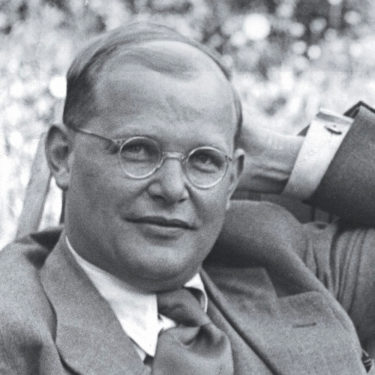
In his book, Life Together, the German theologian and martyr, Dietrich Bonhoeffer devoted a section of a chapter to “Silence and Solitude.”[1]
He wrote, “Silence is the simple stillness of the individual under the Word of God.”
Bonhoeffer goes on to say, “We are to be silent at the beginning of the day because God should have the first word, and we are silent before going to sleep because the last word also belongs to God.” (p. 79)
To summarize in paraphrase, it is in silence that God is known.
I’ve often wondered what was going on in Zechariah’s mind all those months as he waited for his promised child to come.
Perhaps this is where the phrase, “a pregnant pause” originated.
When John was born, Zecharia regained his speech, and from his mouth flowed those wonderful words that we often repeat at Morning Prayer, The Benedictus.
“Blessed be the Lord, the God of Israel;
he has come to his people and set them free.
He has raised up for us a mighty savior,
born of the house of his servant David…”
(Book of Common Prayer, p. 92)
If we wish to speak with even a vague echo of such power, we must learn to be silent, to prepare for speech.
That is a practice that has to be developed.
In 1928, Bonhoeffer preached a sermon on Psalm 62, In that sermon he gave his hearers some practical advice.
None of us is so rushed that we cannot find ten minutes a day during the morning or evening to be silent, to focus on eternity alone, allow eternity to speak, to query it concerning ourselves, and in the process look deeply into ourselves and far beyond ourselves, either by reading a couple of biblical passages or, even better, by becoming completely free and allowing our soul to travel to the house of the Father, to the home in which it finds peace…Before long, the soul is filled…experiencing the eternal silence residing in God’s love.
My soul is silent before God who helps me.[2]
Let us pray:
Most holy God, the source of all good desires, all right judgments, and all just works: Give to us, your servants, that peace which the world cannot give, so that our minds may be fixed on the doing of your will, and that we, being delivered from the fear of all enemies, may live in peace and quietness; through the mercies of Christ Jesus our Savior. Amen.
(Book of Common Prayer, p. 123)
[1] Bonhoeffer, Dietrich. Life Together: The Classic Exploration of Christian Community. New York: HarperCollins Publishers, 1954.(p. 79)
[2] Victoria J. Barnett, editor. The Collected Sermons of Dietrich Bonhoeffer, Volume 2. Minneapolis: Fortress Press, 2017. p. 38
 Walking Together in Faith