Hear my cry, O God,
[Psalm 61:1-3 BCP Psalter]
and listen to my prayer.
I call upon you from the ends of the earth
with heaviness in my heart;
set me upon the rock that is higher than I.
For you have been my refuge,
a strong tower against the enemy.
| DAILY OFFICE READINGS – February 3, 2026 |
|---|
| AM Psalm 61, 62; PM Psalm 68:1-20(21-23)24-36 Gen. 21:1-21; Heb. 11:13-22; John 6:41-51 |
A magazine columnist was asked on a television program the other day how effective he thought the recent nationwide anti-ICE demonstrations would be.
His response was striking.
I can’t remember verbatim everything he said, but, as I remember, he pointed out that the Montgomery Bus Boycott of 1955 lasted 382 days. The entire time of Martin Luther King’s prominence during the Civil Rights Movement lasted thirteen years, yet during that time, even though gains were made, we would be naïve to think that there was nothing more to be accomplished.
We are witnessing the dismantling of many of those Civil Rights victories by the legislatures and the courts before our very eyes.
In other words, the battle against oppression and injustice is ongoing.
The current nationwide protests against ICE are just the beginning.
It prompted me to think about similar movements that continued long-term and eventually either achieved their purpose of simply died out.
The Poor People’s Campaign that Dr. King began shortly before his death, was not able to sustain the momentum once his voice was silenced.
However, since 2013, the Reverend Doctor William Barber has been leading Moral Mondays, a protest movement that centers impacted people, people of faith, and moral leaders who hold elected leaders and government accountable to enact a moral agenda that responds to the urgent needs of the poor. It began in southern states at U.S. Senate offices and, most recently, to Washington D.C.
That’s more than a dozen years!
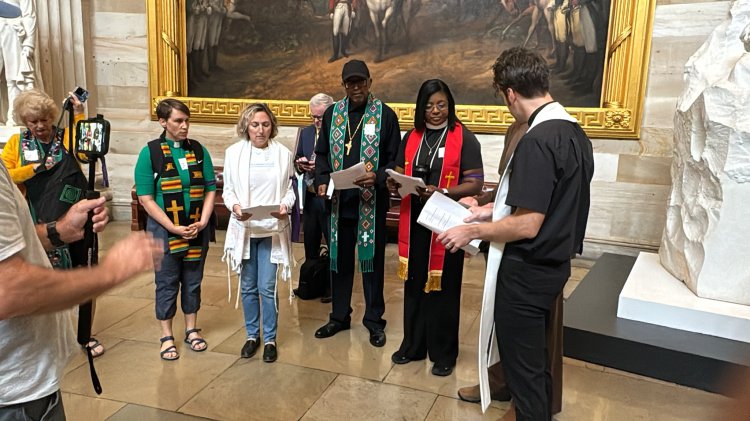
These days, each Monday at the Capitol Building, faith leaders have been gathering weekly to speak up against policy violence since August of last year.
I am also reminded of a movement in East Germany in the 1980’s that eventually did yield results, the tearing down of the Berlin Wall.
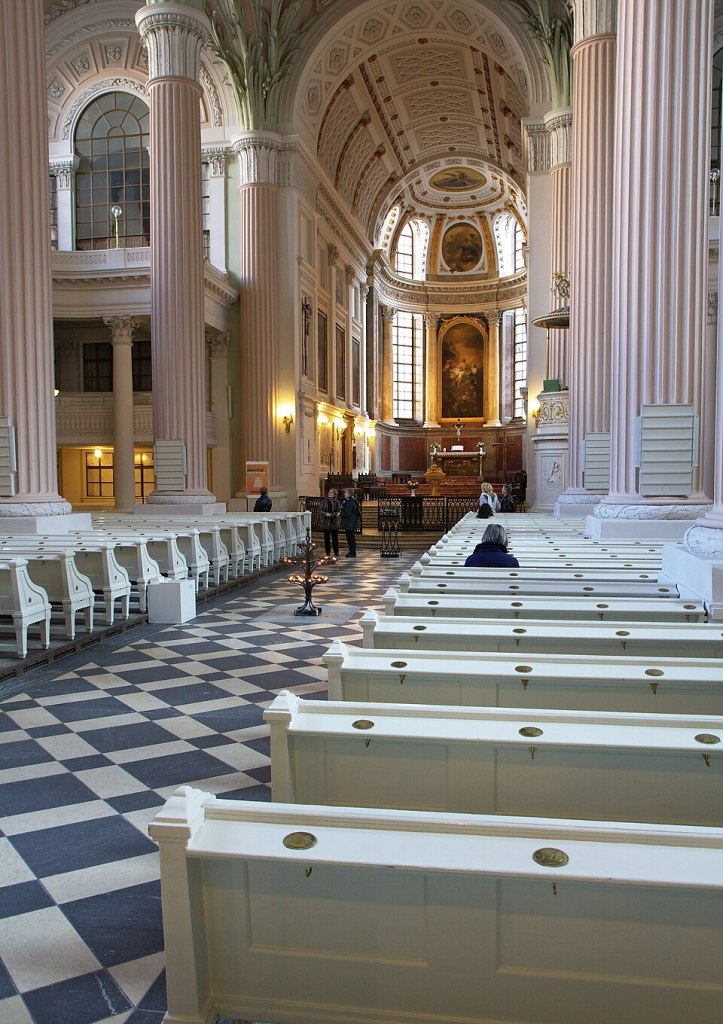
The movement was begun in 1989 by two women who gathered at St. Nicholas Church in Leipzig to pray for peace. The Monday prayers had been happening for seven years, but the two women, Katrin Hattenhauer and Gesine Oltmanns, decided one day to smuggle banners into the church and after leaving the building at the close of service, boldly unfurled them on the square right in front of the East German Secret Police!
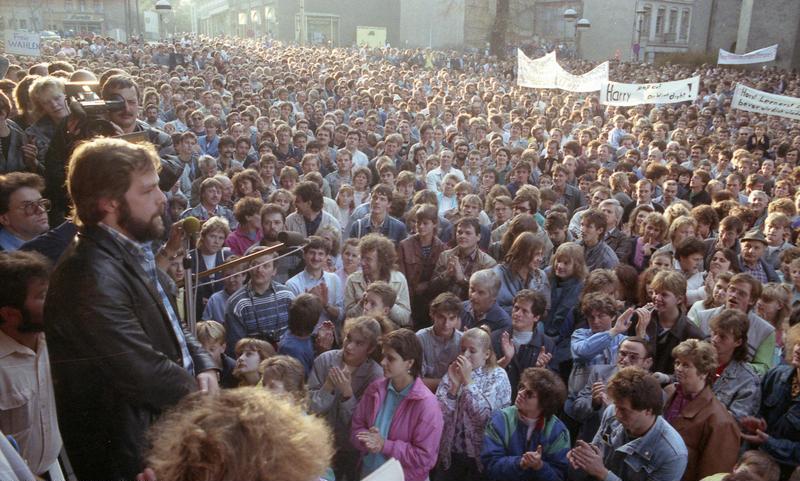
The movement gained momentum and grew to the point that people in other German cities began replicating them. (See feature image above.)
Despite arrests, violence against the demonstrators, and death threats, the end result was that eventually, Germany was reunified in 1991.
Notice that the movement began in a church – a Lutheran one at that – despite the suppression of religion by the Soviets.
The Civil Rights Movement also had its origins in the church.
We can’t ignore the fact that the Gospel is political!
The reading from Hebrews assigned for today in the Daily Office Lectionary is a continuation of the eleventh chapter that begins with the words:
Now faith is the assurance of things hoped for, the conviction of things not seen. [Heb. 11:1]
The author of Hebrews then catalogues a litany of Old Testament characters who never got to fully experience what God had promised them. The most prominent of these is Abraham, who was told that he would be the father of many nations, but only saw two sons, Ishmael and Isaac. (Let’s not forget that God also vowed to make a nation of Ishmael also [Genesis 21:13].)
Today’s reading tells us that:
All of these died in faith without having received the promises, but from a distance they saw and greeted them. [Hebrews 11:13]
Throughout scripture, we are reminded that it takes time to realize God’s promised, if we see them at all in this life.
A couple prominent example is the Exodus from slavery in Egypt. The journey took forty years and NONE of the people who left captivity ever saw the Promised Land.
In the same manner, not all the Israelites who were exiled to Babylon were able to return to Jerusalem. It calls to mind the closing words of the Passover Seder, ““Next Year in Jerusalem!”
In other words, this current struggle against the brutality of this heartless and insensitive government will not end tomorrow, or next week, or next month. It may not even end with a new administration.
Yet we must persist in the effort!
Above all, we cannot and must not forget that it is God who is leading us and that God’s love is supporting us.
The power belongs to God. From God comes our salvation, in God’s appointed time.
Let us pray:
Almighty God, you have created us in your own image: Grant us grace to fearlessly contend against evil and to make no peace with oppression; and, so that we may reverently use our freedom, help us to employ it in the maintenance of justice in our communities and among the nations, to the glory of thy holy Name; through Jesus Christ our Lord, who lives and reigns with you and the Holy Spirit, one God, now and for ever. Amen.
(Book of Common Prayer, edited p. 209)
Featured Image: 40,000 people gathered in front of Plauen’s town hall on 30 October 1989. Courtesy: German Federal Archive
 Walking Together in Faith