Jesus said to his brothers: You go up to the festival. I’m not going to this one because my time hasn’t yet come.” Having said this, he stayed in Galilee. However, after his brothers left for the festival, he went too—not openly but in secret.
[John 7:8-13 Common English Bible]
The Jewish leaders were looking for Jesus at the festival. They kept asking, “Where is he?” The crowds were murmuring about him. “He’s a good man,” some said, but others were saying, “No, he tricks the people.” No one spoke about him publicly, though, for fear of the Jewish authorities.
| DAILY OFFICE READINGS – February 6, 2026 |
|---|
| AM Psalm 69:1-23(24-30)31-38; PM Psalm 73 Gen. 24:1-27; Heb. 12:3-11; John 7:1-13 |
I couldn’t help but draw parallels between the above passage from John’s Gospel and what is happening this Sunday at the Super Bowl in Santa Clara, California.
Before anyone gets their nose out of joint, rest assured I AM NOT comparing Bad Bunny to Jesus!
However, there is a tense atmosphere in this reading that compares to that which has been brewing for months in this country, ever since last September when it was announced who would perform at the halftime show of the Super Bowl,
All of us know who Jesus is, or we think we do.
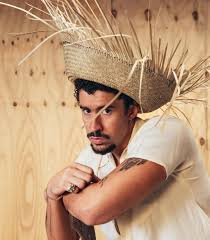
But before talking about him, let’s talk about Benito Antonio Martínez Ocasio, better known by his professional name – Bad Bunny.
Bad Bunny is a 31-year-old performer from Bayamón, Puerto Rico, which also happens to be my birthplace, by the way.
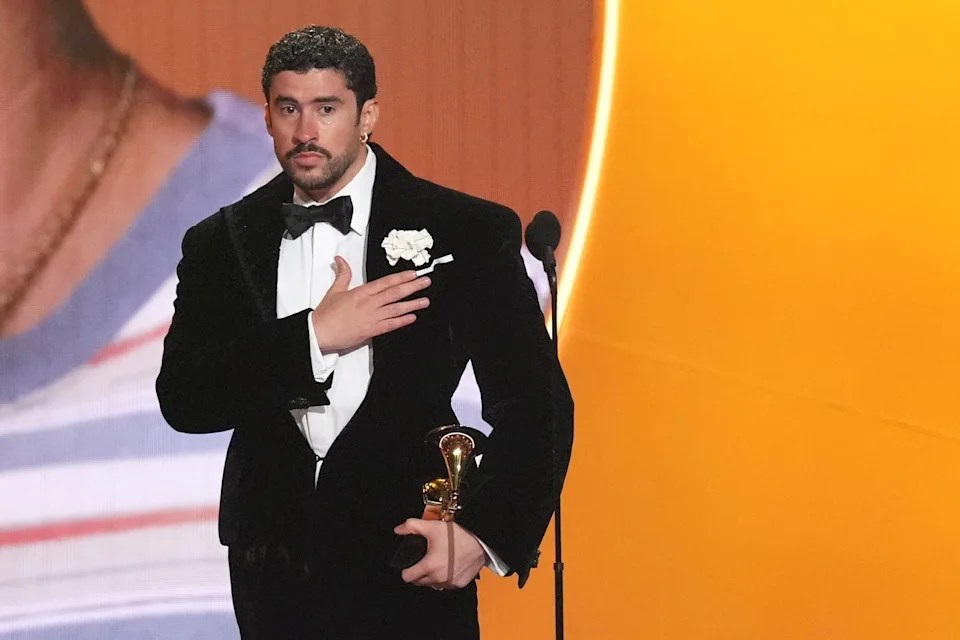
He is one of the most popular singers worldwide, having won three awards at the Grammy’s on Sunday night, including the prestigious Album of the Year.
Incidentally, it was the first time an all-Spanish-language album had garnered the honors.
Despite the fact that he sings in Spanish, he has been the most listened to artist on the streaming channel, Spotify, four times in the past five years.
Nevertheless, his being named to perform this Sunday was met with a furious backlash by right-wing conservatives and supporters of the current President and his administration, who are waging an all-out war against diversity, and even more specifically, against Latino immigrants or anyone who speaks a language other than English.
These nationalistic xenophobes have gone as far as to announce that they will be hosting an “All-American” Super Bowl Halftime Show, celebrating “faith, family, and freedom.”
The name itself is a thinly veiled disguise of prejudice and bigotry.
The vilifying has been relentless, having accused Bad Bunny of every racial, ethnic, and sexual insult imaginable. One of the most uninformed accusations was that he wasn’t even a citizen.
Of course, a little history is important at this point.
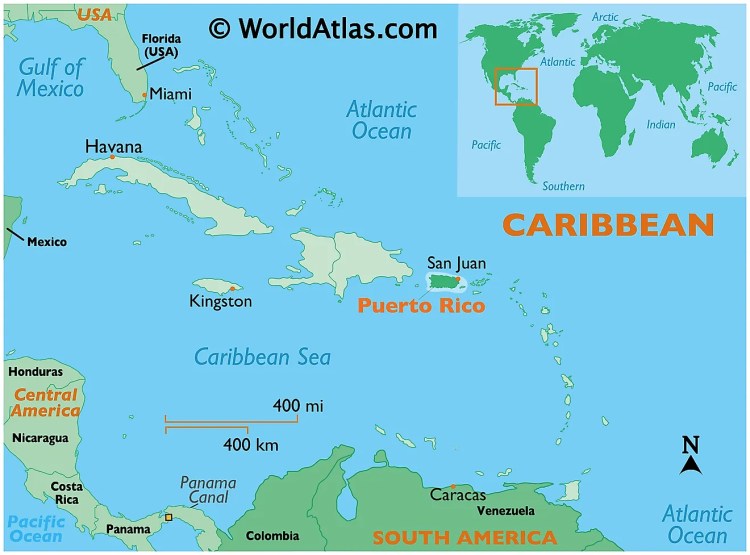
Puerto Rico became a territory of the United States in 1898 after the defeat of Spain in the Spanish American war.
In 1917, responding to pressure for independence, President Woodrow Wilson signed into law the Jones Act which gave citizenship to the residents of Puerto Rico and reformed the island’s system of government.
It is more than mere coincidence that two months later, the U.S. also passed the Selective Service Act of 1917 and the U.S. military naturally conscripted Puerto Rican men to serve in the armed forces.
As a result, 20, 000 men were sent to serve in World War I for a country they knew nothing about.
In addition, the war created labor shortages in many industries on the mainland and so more than 10,000 Puerto Rican laborers were recruited to work on war-related projects.[1]
Throughout the history of these past 100-plus years the U.S. government has tapped hundreds of thousands of Puerto Rican workers to fill positions on the mainland; which is how the first Puerto Rican communities were formed in New York, Chicago, Philadelphia, and other parts of the Midwest.
In my corner of Ohio alone, U.S. Steel’s National Tube Division recruited five hundred workers to Lorain in 1948. And in 1951, the Ohio Employment Service brought more than 1,524 Puerto Ricans to Youngstown and Cleveland. [2]
I’ve gone overboard with this background to show that there was, is, and will always be a need for labor in the United States. The fear of increased unemployment, and immigrants taking jobs from people who need them is overstated. Everyone who comes has an opportunity.
What does all this have to do with the Gospel reading?
The Gospel according to John is unique in that it covers many of the Jewish festivals besides Passover.
In the above reading, Jesus and his brothers are preparing for the Feast of Booths, an agricultural festival that commemorates the Harvest and the forty-year wandering in the wilderness after escaping slavery in Egypt. It was one of the big three festivals, along with Passover and Pentecost; even bigger than the Super Bowl.
By this time Jesus was already a controversial figure, having turned over the tables of the money changers two Passovers earlier, thus threatening the authority of the Jewish leaders, and having gained a following from those who proclaimed him as the Messiah.
Jesus was from Galilee. That also didn’t endear him to the authorities.
The Mexican American priest and scholar, Virgilio Elizondo, in a 1997 essay titled, “Transformation of Borders,” describes Galilee as “a crossroads of the peoples of the world, a place whose people were considered impure and inferior precisely because here the boundaries of identity and belonging were constantly crossed if for no other reason than for basic survival.”[3]
The Jewish authorities obviously insist Jesus can’t be the Messiah because the Bible says he has to be from Bethlehem.
So we see the racial animus then as now. We see the division of classes then as now. We see the conflict then as now.
By now, hopefully, you see the similarities.
No, Bad Bunny is NOT Jesus.
But his message at the Grammys has a theological underpinning that cannot be ignored.
‘We are not savages. We are not animals. We are not aliens. We are humans, and we are Americans.
‘The hate gets more powerful with more hate. The only thing that is more powerful than hate is love. So, please, we need to be different. If we fight, we have to do it with love.
‘We don’t hate them, we love our people, we love our family, and that’s the way to do it, with love.’
He dedicated his award for top album “to all the people that had to leave their homeland, their country, to follow their dreams,”
I’m not normally a big fan of the Super Bowl Halftime Show.
My musical tastes have not yet embraced rap music.
Yet there is a personal motivating element of patriotic pride; so much so, that like Jesus, who didn’t want to go to the festival and ended up going anyway, I will be watching the Super Bowl Halftime Show on Sunday.
Let us pray:
O God and Father of all, whom the whole heavens adore: Let the whole earth also worship you, all nations obey you, all tongues confess and bless you, and men and women everywhere love you and serve you in peace; through Jesus Christ our Lord. Amen.
(Book of Common Prayer, p. 124)
[1] http://www.historymatters.gmu.edu/d/5065
[2] Juan González, Harvest of Empire, Penguin Books 2003,p. 89
[3] Timothy Matovina, editor. Beyond Borders: Writings of Virgilio Elizondo and Friends. Maryknoll: Orbis Books, 2000, p. 180
 Walking Together in Faith