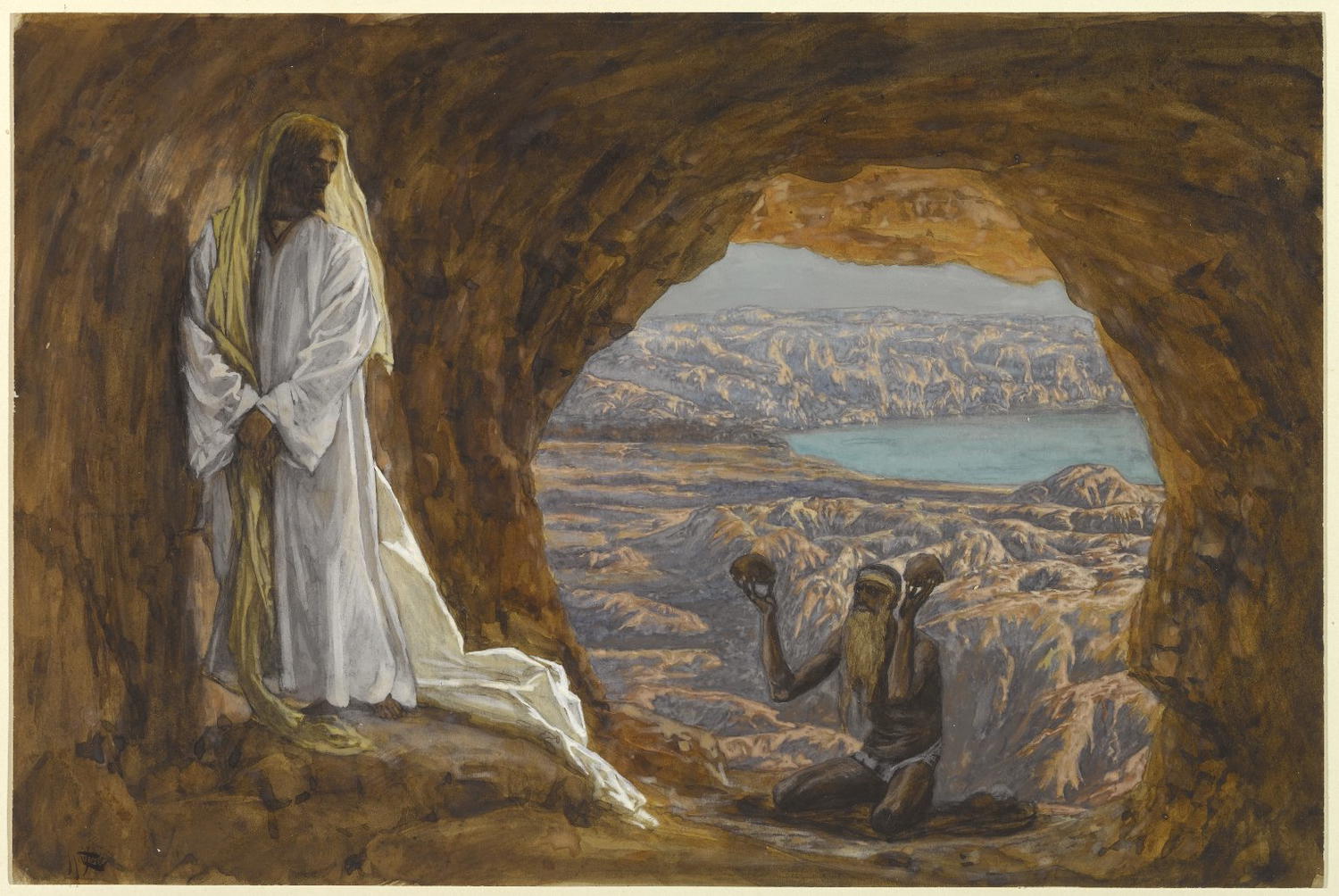
God chose what is low and despised in the world, things that are not, to reduce to nothing things that are, so that no one might boast in the presence of God.
[1 Corinthians 1:27-28 nrsv]
| DAILY OFFICE READINGS – February 24, 2026 |
|---|
| AM Psalm 45; PM Psalm 47, 48 Gen. 37:12-24; 1 Cor. 1:20-31; Mark 1:14-28 |
I preached in Spanish last Sunday for the first time in a long while.
I hate that I have to do this, but I am not revealing the location of the church on this post.
For obvious reasons, I am abundantly cautious these days of revealing any information that might put a vulnerable population at risk.
I was asked several weeks ago if I would visit this congregation because they have had several immigrant families visiting for some time, and they are curious about the Lutheran Church. The pastor’s Spanish is limited to a few words.
We celebrated the liturgy bi-lingually in English and Spanish.
It was, as I said to them, how I imagine that first day of Pentecost centuries ago.
There is also a scene in Revelation 7:9 that resonates with me when I am in groups like this:
After this I looked, and there was a great multitude that no one could count, from every nation, from all tribes and peoples and languages, standing before the throne and before the Lamb, robed in white, with palm branches in their hands.
Every First Sunday in Lent, the Gospel reading is a version of Jesus being tested by the Devil. This year was Matthew’s account.
Rather than dwell on the temptation, I approached the encounter from the standpoint of identity, and the question Satan puts to Jesus:
“If you are the Son of God…”
I addressed the congregants as “beloved children of God” because I wanted them, above all, to never forget their identity.
In this age when immigrants are being disrespected, threatened, and mistreated, it is of the utmost importance that none of that changes who we are and whose we are.
I wanted them to always remember that.
After the service, members of the congregation, as well as their newest arrivals, and I, moved to the fellowship hall and sat around the tables to eat and chat.
Interestingly, the questions I anticipated never really came up. They were more interested in the theological and doctrinal differences between the Catholic church they were more acquainted with, and the Lutheran Church that has been so welcoming and hospitable to them.
I got no political or immigration questions whatsoever.
We talked until mid-afternoon and even then, several seemed reluctant to leave.
It was a wonderfully pleasant day.
The eating, by the way, is a given with just about any immigrant population. It brought back precious memories of my first mission congregation in Canton.
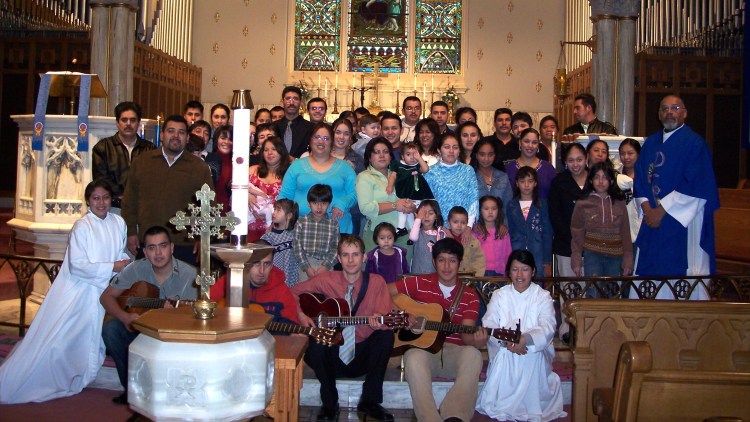
We would take advantage of any reason to celebrate, whether it was a baptism, birthday, or a church feast day. If we didn’t have a reason to celebrate, we’d invent one.
The members of our host congregation would always notice how much our folks loved getting together. Their remarks implied a feeling of envy, as if to say, “Why don’t we have this much fun?”
Driving home that late afternoon I passed through a small village in Ohio that has a larger-than-life Republican headquarters building. It is near the town square and couldn’t escape notice if it tried. Two imposing photos of the candidates for senate and governor of the state are plastered on the windows separated by a huge sign of the names of the President and Vice-President in their party colors.
Again, I would love to show a photo but I’m purposefully avoiding locations.
I felt sadness for a moment thinking about the people that work in this building and the party they represent. They are wreaking so much havoc on this country and on people who are vilified simply for being different.
(A few years ago, I traveled through this same village at night and was stopped for driving five miles over the speed limit. Fortunately, I was wearing my clerical collar and the policeman let me off with a warning.)
I quickly shook off the sadness and chose to focus on the joy I had experienced earlier in the day and refused to let go of.
We are a divided nation, and our only hope for healing is reconciliation with each other through the cross of Jesus.
In the focus verse I chose from our assigned readings for this day, Paul is also addressing divisions in the church at Corinth.
And his message to the church, and by extension to us, is that in the presence of God, there is no room for arrogance or conceit. We are all equal before God. No one can boast in the presence of God.
As we journey to the cross in this season of Lent, I am also reminded of the words of James Cone in The Cross and the Lynching Tree:1
“The real scandal of the Gospel is this: humanity’s salvation is revealed in the cross of the condemned criminal Jesus, and humanity’s salvation is available only through our solidarity with the crucified people in our midst.”
“The cross is impossible to embrace unless one is standing in solidarity with those who are powerless.”
(Cone p. 160, 162)
It bears repeating that we are seeing that solidarity in the people of Minneapolis and how they have stood in solidarity with each other and their immigrant neighbors over the past several weeks.
It’s hard for some to understand the wideness of God’s mercy, but no matter what we think of each other, we are all God’s children.
Let us pray:
Almighty God, whose blessed Son was led by the Spirit to be tempted by Satan: Come quickly to help us who are assaulted by many temptations; and, as you know the weaknesses of each of us, let each one find you mighty to save; through Jesus Christ your Son our Lord, who lives and reigns with you and the Holy Spirit, one God, now and for ever.. Amen.
(Book of Common Prayer p. 218)
- Cone, James H. The Cross and the Lynching Tree. Maryknoll: Orbis Books, 2011. ↩︎
Featured Image: Jesus Tempted in the Wilderness, James Tissot, 1886-1894, Brooklyn Museum
 Walking Together in Faith