If I proclaim the gospel, this gives me no ground for boasting, for an obligation is laid on me, and woe betide me if I do not proclaim the gospel! For if I do this of my own will, I have a reward; but if not of my own will, I am entrusted with a commission. What then is my reward? Just this: that in my proclamation I may make the gospel free of charge, so as not to make full use of my rights in the gospel.
[1 Corinthians 9:16-18 NRSV]
| DAILY OFFICE READINGS – March 13, 2026 |
|---|
| AM Psalm 95 [for the Invitatory] 88; PM Psalm 91, 92 Gen. 47:1-26; 1 Cor. 9:16-27; Mark 6:47-56 |
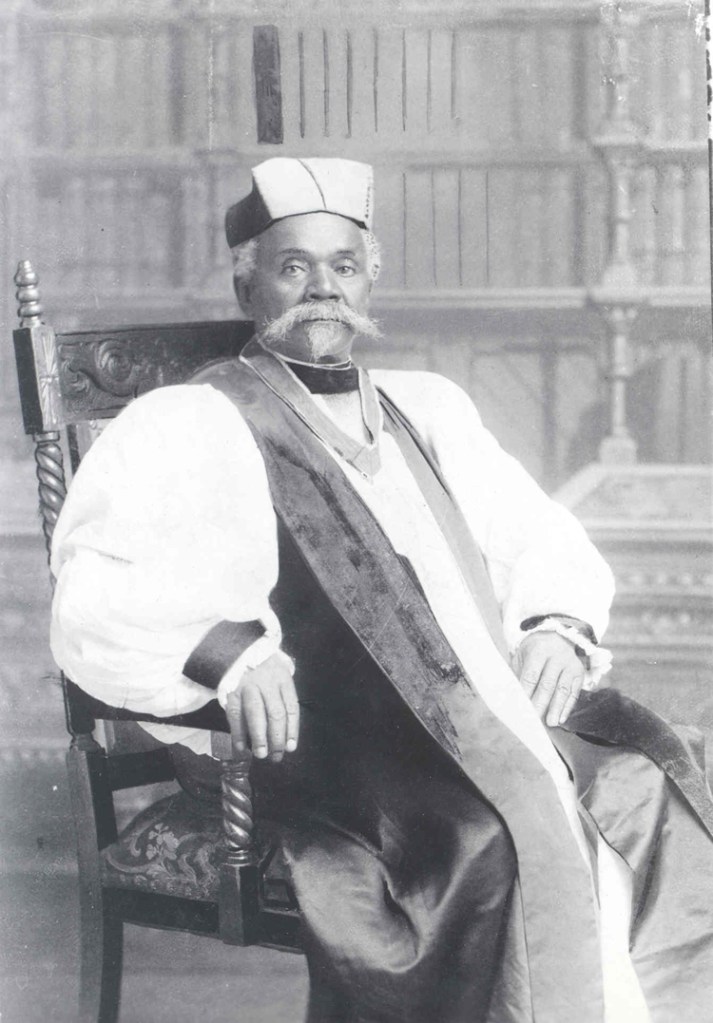
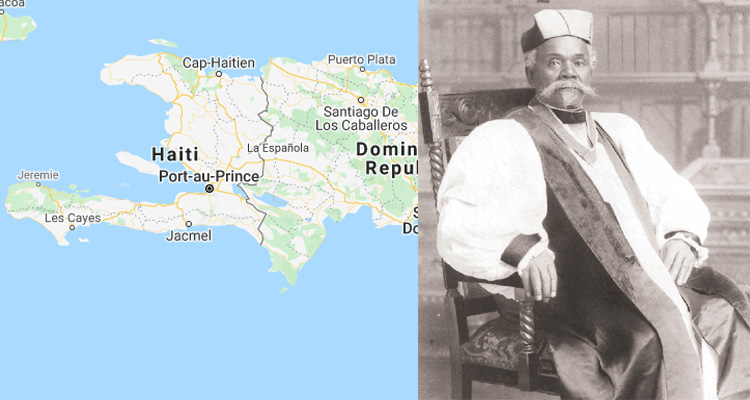
On March 13, the Episcopal Church commemorates James Theodore Holly, the First African American Bishop in the Episcopal Church and Bishop of Haiti.
Born a free African American in Washington, D.C., on October 3, 1829, Holly was baptized and confirmed in the Roman Catholic Church. He would have become a Catholic priest, but the Catholic Church refused to ordain black priests, so Holly became an Episcopalian.
He was ordained a deacon in June of 1855, and then a priest in January of 1856.
In 1861, Holly led a group of 110 people to Haiti to establish a mission there.
That effort was plagued by many obstacles, namely disease and death.
Holly described the ordeal in the following terms:
But in order that we might not think of ourselves more highly than we ought to think, an overruling Providence, higher than the princes of this world, saw fit to “visit us with trouble and to bring distress upon us. ” A destructive fever broke out among the colonists, and in the short period of six months death had claimed forty-three of the company as its prey. As many as four persons in one day had been committed to their last resting-place. During the contagion five members of my own household had been laid away in the silent tomb. Of a family of eight persons, of which, when we sailed from New Haven, Ct., on the 1st of May, 1861, I was the head, by the 1st of February, 1862, nine months after our arrival in Haiti, only three remained alive, myself and my two little sons, aged respectively three and five years.1
Many of the survivors returned to the United States, but Holly pressed on to establish Holy Trinity Church in Port-Au-Prince in 1863, and other churches and schools, as well as medical programs, and provided for the training of aspiring priests.
In 1874 he was ordained missionary bishop of Haiti at Grace Church, New York City, not by the mainstream Episcopal Church, who refused to ordain a black missionary bishop, but by the American Church Missionary Society, an Evangelical Episcopal branch of the Church.2
In 1897, he was also named bishop of the Episcopal Church in the Dominican Republic.
He died in his diocese, at Port-au-Prince, Haiti on March 13, 1911.
In the aftermath, however, the fortunes of the diocese took a sad turn. Assassinations and revolutions in both Haiti and the Dominican Republic plunged both countries into civil wars and today, more than a century after Holly’s death, Haiti still does not have a bishop diocesan after years of internal conflict. The diocese, which has more baptized members than any diocese in the Episcopal Church, struggles with self-governance and its relationship to the broader church.3
Like all majority white denominations, the Episcopal church has had a checkered history of race relations with Black people. In many ways, the church is a reflection of American society. Prejudice, complacency, indifference, and injustice continue to challenge the vision of God’s Kingdom where that “great multitude from every nation, from all tribes and peoples and languages, stand before the throne and worship God (Revelation 7:9).
But the Church doesn’t back away from engaging in the pursuit of becoming a beloved community.
To that end, the journey for justice and reconciliation both in the Church and in the larger society remains a work in progress.4
Let us pray:
Most gracious God, whose servant James Theodore Holly labored to build a church in which all might be free: Grant that we might overcome our prejudice, and honor those whom you call from every family, language, people, and nation; through Jesus Christ our Lord, who lives and reigns with you and the Holy Spirit, one God, now and for ever. Amen.
(Lesser Feasts and Fasts, edited p. 135)
 Walking Together in Faith