
rabbi jonathan sacks
Do not believe you can rectify the past by avenging it. That way you merely succeed in perpetuating the past instead of healing it.
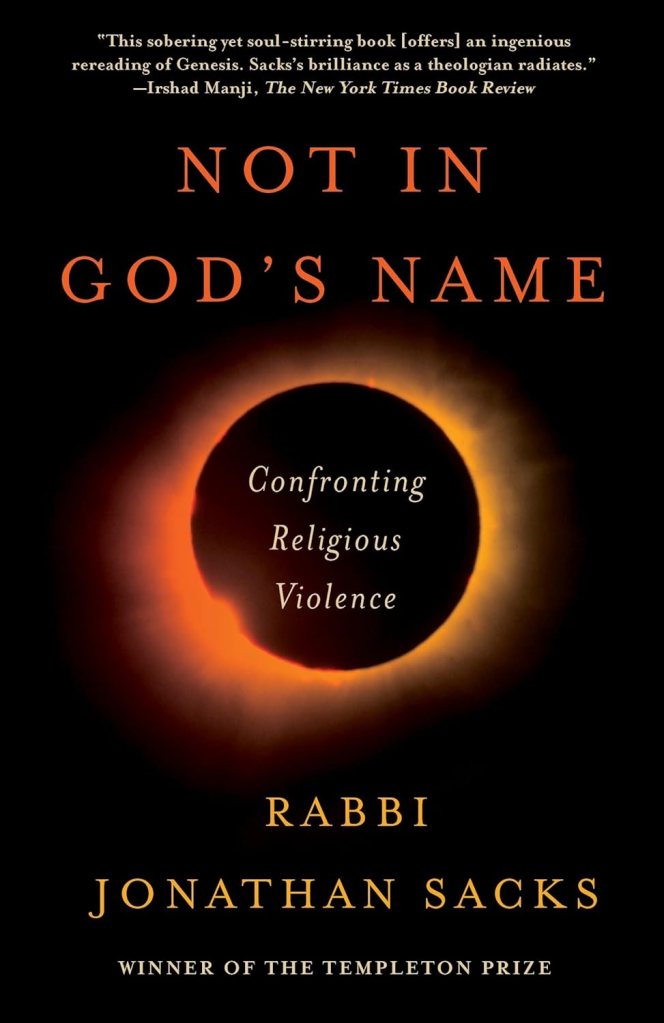
This past summer I read a book titled Not in God’s Name: Confronting Religious Violence, by Rabbi Jonathan Sacks. Ostensibly, it is an analysis of Genesis, the first book of the Bible.
Since the Old Testament readings were the main focus of my sermons for the three months of the interim I was serving, I was seeking some background that would help me better explain the stories of dysfunctional family relationships that dominate Genesis. The book took me far longer to read than usual because it seemed that I was underlining a sentence or more in just about every paragraph.
I picked up the book again this weekend after hearing the horrible, heartbreaking news of the bombings in Israel by Hamas terrorists, rekindling the apparently endless hostilities between Jews and Palestinians. My eyes were immediately riveted to a quote on page twelve:
“Killing the weak, the innocent, the very young and old is evil. Indiscriminate murder by terrorist attack or suicide is evil. Murdering people because of their religion or race or nationality is evil.” (p. 12)
There is no way to justify the events that took place on Saturday. No matter how much sympathy one may have for the injustices that have been perpetrated on the Palestinian peoples in the past, this horrific retaliation cannot be tolerated in any way, shape, or form.
I don’t pretend to understand all the issues. I can’t honestly say that I have spent any appreciable amount of time trying to explore the historical precedents that have generated the conflict. And it would be presumptuous of me to offer an opinion or even a conclusion.
I simply know that my heart breaks for the thousands of innocent victims, their families, the two nations, and whatever possibilities for peace that may have been shattered by this latest outbreak of violence.
It is of little to no consolation to say that we must make every effort to try and resolve this armed conflict – not militarily, but by diplomatic means. Even so, despite our best efforts, the grief will always remain to remind us of the wickedness that humankind is capable of.
As I skimmed the myriad of underlined phrases in my copy of the book, I noted the many points that Sacks highlighted, and his thorough explanations of the ways our religious misunderstandings have contributed to this discord.
At the heart of Genesis is the troubling theme of sibling rivalry – Cain and Abel, Isaac and Ishmael, Rachel and Leah, Jacob and Esau, Joseph and his brothers – and how it has been at the root of all the religious violence we’ve experienced throughout history.
In all these stories, there is an underlying desire to want what the other has. Cain was jealous of Abel because God looked more favorably on Abel’s offering. Thus, the first religious act led to the first murder. One brother slays another. (Genesis 4)
Cain wanted God’s blessing. Isaac received Abraham’s inheritance, despite the fact that Ishmael was the firstborn. Jacob cheated Esau out of his birthright and blessing. Leah gave birth to the bulk of Jacob’s children, yet it was Rachel whom Jacob loved. Joseph’s brothers sold him into slavery out of spite, because he was Jacob’s favorite son.
While only one of these conflicts led to a direct death, relationships were fractured. And what we have seen down through the centuries is a misuse of these stories to justify violence in the world. Yes, we, as humans, are all guilty of the same thing – wanting what others have. Thus, all three of the Abrahamic faiths – Jews, Christians, and Muslims – have interpreted these narratives to confirm their sense of entitlement or superiority.
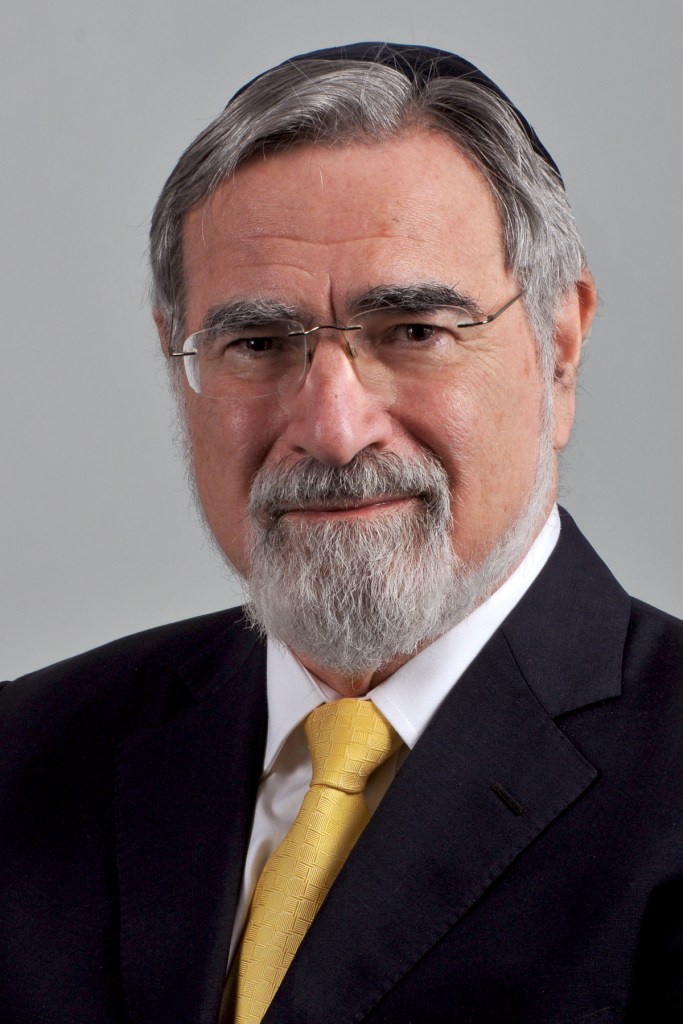
Sacks points out that, “Terror is the epitome of idolatry. Its language is force, its principle to kill those with whom you disagree. That is the oldest and most primitive form of conflict resolution. It is the way of Cain.” (p. 265)
But Sacks also argues that a closer, more careful rereading of these texts may lead to a different conclusion. For example, when Abraham sent Ishmael and his mother, Hagar, away, God’s angel appeared to her in the wilderness and told her, “Do not be afraid; for God has heard the voice of the boy where he is. Come, lift up the boy and hold him fast with your hand, for I will make a great nation of him.” (Gen. 21:17-18)
The point then, is that God’s choice of one sibling doesn’t suggest a rejection of the other.
If we make a more concerted effort to understand scripture, we will see additional instances where the abundant blessings of God are extended to all whom society discards, devalues or disregards.
And the message is clear. Whatever the world thinks, we can never fall outside of God’s grace.
Sacks, who, sadly, died of cancer in 2020, dedicated his life to making this point. He wrote dozens of books with a similar vein. There are countless audio recordings and videos of his interviews and speeches on the internet.
Our only hope, Sacks concludes, is to let go of the hate and embrace each other as God’s children. “Now is the time for Jews, Christians and Muslims to say what they failed to say in the past: we are all children of Abraham. And whether we are Isaac or Ishmael, Jacob or Esau, Leah or Rachel, Joseph or his brothers, we are precious in the sight of God. We are blessed. And to be blessed, no one has to be cursed. God’s love does not work that way.” (p.267)
May we recommit our efforts to work to make it so.
 Walking Together in Faith
Thank you for this! So timely as our hearts are heavy due to recent events in Israel. May God continue to speak through you!
LikeLike
Good Morning, Bishop,
Thank you so much for your post! Sack’s book is one I need to add to my library.
Blessings
div>Bob Cheyney
div>
Sent from my iPhone
div dir=”ltr”>
blockquote type=”cite”>
LikeLike
Good thoughts to be prioritized at this critical time. Thanks, brother.
LikeLiked by 2 people
Our hearts break as we witness the suffering, destruction, and death in Gaza. May God give them peace.
LikeLike