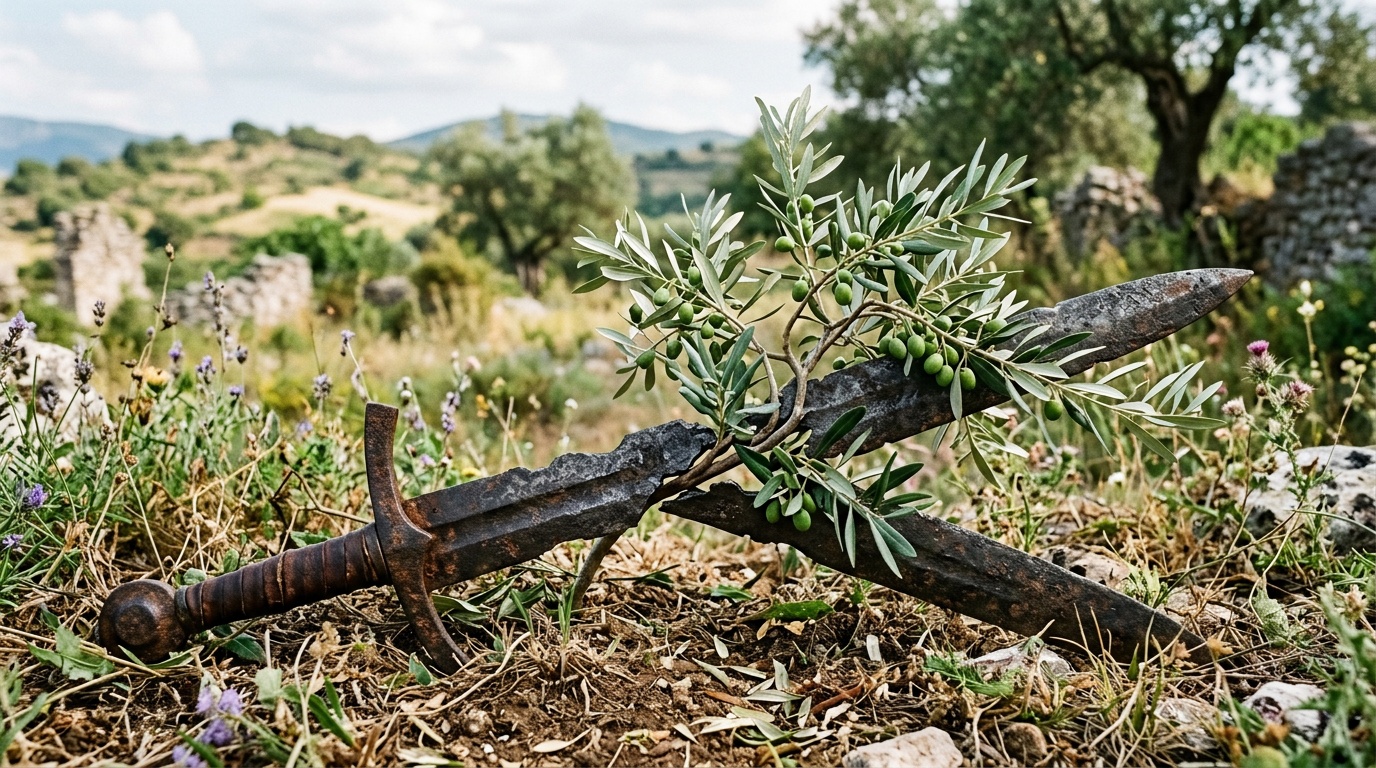
[Jesus said to his disciples:]
[JOHN 14:27 nrsvue]
Peace I leave with you;
my peace I give to you.
I do not give to you as the world gives.
Do not let your hearts be troubled,
and do not let them be afraid.
| DAILY LECTIONARY READINGS – APRIL 14, 2026 |
|---|
| AM Psalm 5, 6; PM Psalm 10, 11 Exod. 15:1-21; 1 Pet. 1:13-25; John 14:18-31 |
When I was active in full-time parish ministry, I would use the above verse from John’s Gospel to introduce the sharing of the peace.
I admit I was influenced by the Roman Missal which includes a “Prayer for Peace.”
The priest begins with the words: “Lord Jesus Christ, who said to your Apostles, ‘Peace I leave you, my peace I give you,’ look not on our sins, but on the faith of your Church, and grant her peace and unity in accordance with your will.”
I was reminded of this on Sunday when the peace was shared in the church I visited.
It was, as I jokingly call it, like halftime of a football game. Everybody greeted everyone, just as we would do in the parish I served. We didn’t want the fellowship to end.
But peace seems to be in short supply these days.
Just last week, the President of the United States made a shocking threat to destroy the population of Iran if their government didn’t give in to his demands to end the war that he started.
(Yes, this is the same President who wants to be awarded the Nobel Peace Prize.)
In the end, his threats turned out to be nothing more than his usual bluster.
But, like the boy who cried wolf, we can’t dismiss his bombastic browbeating no matter how accustomed we’ve become to his bluffing.
Those of us who grew up in the sixties have by now become almost numb to conflict. We’ve lived through Viet Nam, the Cold War, the Gulf Wars, Afghanistan, and countless Middle East clashes.
When will they ever learn?, a familiar refrain from the protest song, “Where Have All the Flowers Gone,” plays on an endless loop in our brain.
I have on my shelf a book of essays by Thomas Merton titled Passion for Peace.
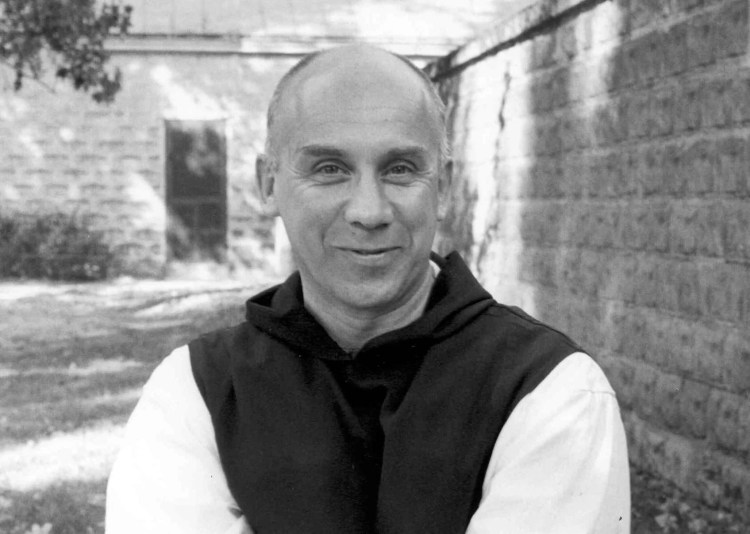
Merton reflected constantly on war and non-violence to the point that his superiors ultimately restricted his writing on the subject.
I’ve linked his “Prayer for Peace” that he wrote in 1962 and was read in congress on Holy Week of that year. It appears on pages 166-169 of this book’s edition.
What strikes me is that the environment that Merton portrayed sixty years ago is eerily similar to what we’re experiencing today.
Here, for example, is the beginning paragraph of an essay titled “Nuclear War and Christian Responsibility:”
It has been said so often that it has become cliché, but it must be said again at the beginning of this article: the world and society of man now face destruction. Possible destruction: it is relatively easy, at the present time, to wipe out the entire human race either by nuclear, bacterial, or chemical agents, separately or together. Probable destruction: the possibility of destruction becomes a probability in proportion as the world’s leaders commit themselves more and more irrevocably to policies built on the threat to use these agents of extermination. (p. 41)
And this nation’s leader articulated that very threat in his social media post on Easter Sunday!
It is genuinely frightening that the President, the Commander-in-Chief of our armed forces, along with his Secretary of Defense – or “of War” as he prefers to be titled – are both so seemingly belligerent that confrontation is their default position.
Compromise has no quarter in their arsenal. With them, it’s “shoot first, ask questions later.”
And though both claim to be Christian, neither meekness nor morality guide their thinking.
The President in particular has taken issue with Pope Leo XIV, who has criticized his recent aggressions in Iran, as well as the harsh treatment of immigrants in the United States.
I was beginning the first draft of this reflection when the President released a social media rant that took the Pope to task, calling him “weak on crime and terrible for foreign policy.”
The Pope’s response was a model for all of us to follow.
“I have no fear neither of the Trump administration nor of speaking out loudly about the message of the Gospel,” he said in comments to a different journalist. “That’s what I believe I am called to do and what the Church is called to do. We’re not politicians. We’re not looking to make foreign policy, as [Trump] calls it, with the same perspective that he might understand it.”
“But I do believe that the message of the Gospel, ‘blessed are the peacemakers,’ is a message that the world needs to hear today.”
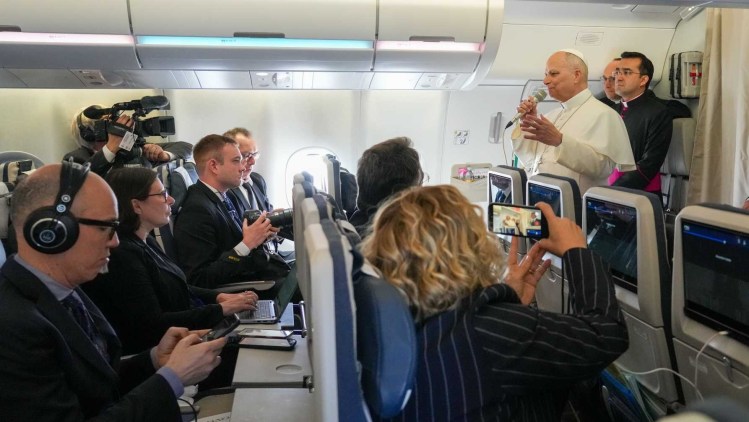
He said to another news agency (Reuters):
“I will continue to speak out loudly against war, looking to promote peace, promoting dialogue and multilateral relationships among the states to look for just solutions to problems.”
“Too many people are suffering in the world today. Too many innocent people are being killed. And I think someone has to stand up and say: ‘There’s a better way’.”
“Peace I leave with you; my peace I give to you,” Jesus says. “I do not give to you as the world gives.”
Peace is not political.
Peace is a commodity we sorely need in our world and is absent from far too many of us.
Peace, in this sense, is not just the absence of conflict, but a feeling of wholeness.
And as Christians, we are called to pass on Jesus’ compassionate concern for those who – when it comes to the state of our world – are often troubled by doubts, questions, and fears.
We who have become Christ’s own body as the church can touch and affirm each other to assure that God’s presence still surrounds us when we are feeling frustrated, alone, or abandoned.
We are encouraged to remember and share with our children, our friends, those in our faith community, and whomever else we may encounter, what they need to know about our love for them and our faith in God.
In the face of the chaos, and the rejection of God in the world, we are called to be people who serve as dwelling places for God – a God who comes to dwell with us in the form of the Holy Spirit; who encourages us to come out of ourselves and join in the adventure of creation, and the challenges of healing and liberation in the world.
“Peace I leave with you; my peace I give to you. I do not give to you as the world gives. Do not let your hearts be troubled. Do not let them be afraid.”
Let us pray:
O God, the author of peace and lover of concord, to know you is eternal life and to serve you is perfect freedom: Defend us, your humble servants, in all assaults of our enemies; that we, surely trusting in your defense, may not fear the power of any adversaries; through the might of Jesus Christ our Lord. Amen.
(Book of Common Prayer, p. 99)


“Merton reflected constantly on war and non-violence to the point that his superiors ultimately restricted his writing on the subject.”
Ironic . . . yes, Merton had many important reflections that we all can benefit from.
Thank you.
LikeLiked by 1 person