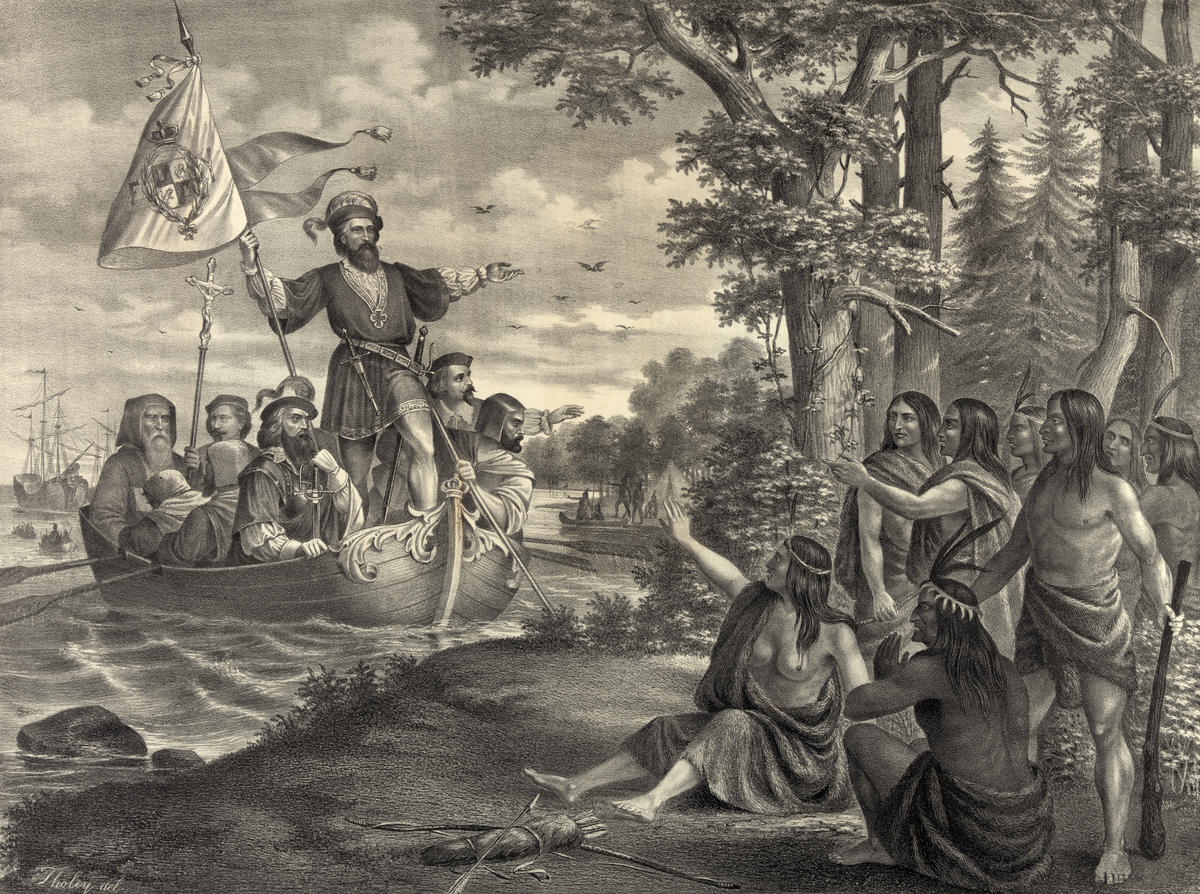
Then the LORD said, “I’ve clearly seen my people oppressed in Egypt I’ve heard their cries of injustice because of their slave masters. I know about their pain. I’ve come down to rescue them from the Egyptians in order to take them out of that land and bring them to a good and broad land, a land that’s full of milk and honey, a place where the Canaanites, the Hittites, the Amorites, the Perizzites, the Hivites, and the Jebusites all live.
[Exodus 3:7-8 Common English Bible]
The year 2021 was my first full year of retirement. We were also slowly emerging from the COVID shutdown. The enforced idleness gave me more time to reflect and write. This essay was a result of that productive period. As I continue to review those compositions I will re-post some of the ones I feel are worth sharing again, with some light editing and updating where necessary. This one offers some thoughts on Indigenous Peoples Day, celebrated on October 12.
When I was in seminary, I read a troubling essay by Robert Allen Warrior, a member of the Osage Nation, entitled, “A Native American Perspective: Canaanites, Cowboys, and Indians.”[1]
The basic premise of the article was that the Exodus narrative of the Bible is not an acceptable model of liberation for all contexts and all peoples.
The essay had a chilling impact that has lingered in my conscience even now, more than two decades since I first read it.

I spent some time rereading it in advance of Indigenous People’s Day, the day formerly known as Columbus Day.
Over the last 30 years or so, I have developed an appreciation for reading the Bible with “Third-World” eyes, thanks to scholars like Robert McAfee Brown, Cain Hope Felder, and liberation theologians like Gustavo Gutiérrez, and Jon Sobrino. But it was not until Warrior’s eye-opening essay that I had even entertained the idea that Native Americans didn’t necessarily fit into the Exodus liberation narrative.
In the eyes of Robert Allen Warrior, they were the Canaanites!
His essay points out the contradictions of Israel’s God, who delivers Israel from slavery but promises to vanquish and drive out the people already living in the land which God has promised that they will occupy. To quote Warrior, “Yaweh the deliverer became Yaweh the conqueror.”[2]
Many of us, when reading the Bible, ignore those paradoxes. Theologians and scholars find them easier to ignore rather than explain. The truth is there’s really no way to reconcile the ambiguities.
The history of Christianity and Native American peoples has been one of barbaric brutality toward the indigenous tribes that occupied all the lands of the Western Hemisphere from the very moment that Europeans set foot on these shores.
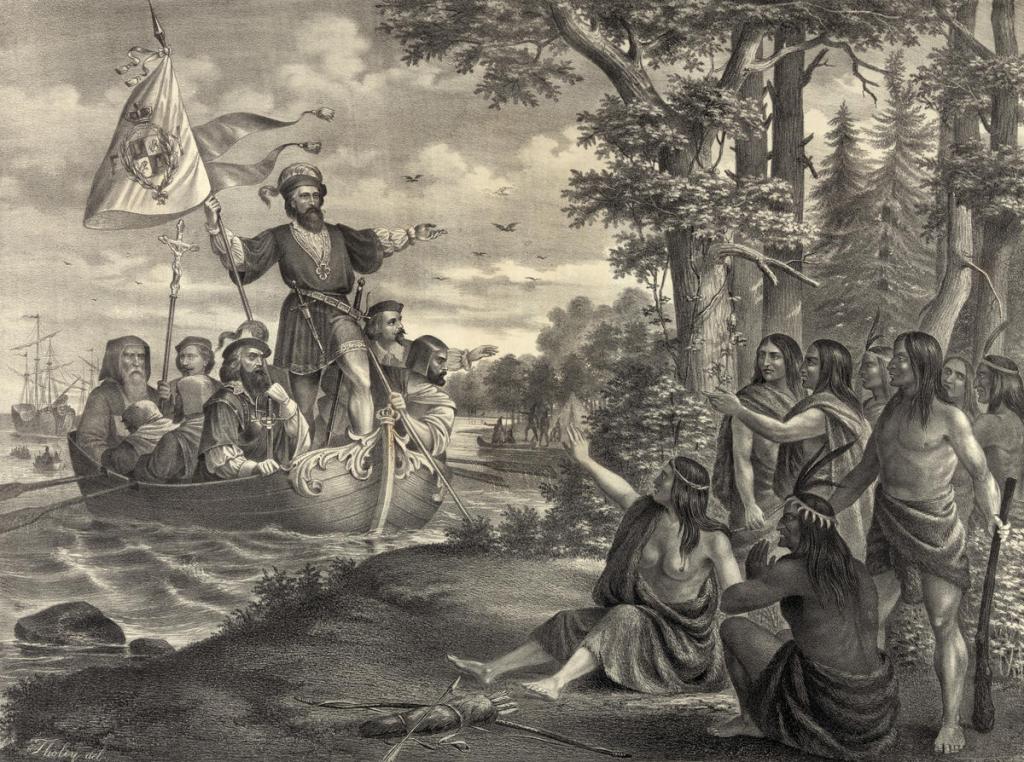
Beginning with Christopher Columbus in 1492, the Spaniards began a string of conquests that nearly extinguished the indigenous peoples of the Caribbean islands. They were followed to the rest of the Americas by the Portuguese, the Danish, the British, and the French.
One need simply to read the first chapter of Eduardo Galeano’s Open Veins of Latin America, to be repulsed by the inhuman cruelty inflicted on the unsuspecting inhabitants, who greeted the invaders like Gods, only to be kidnapped, enslaved, killed, and infected by the numerous diseases – smallpox, typhus, yellow fever, among others – that the Spaniards brought with them, and for which the natives had no immunity.[3]
The irony of the Spanish conquests was that they did all this in the name of religion. The Papal Bull issued by Pope Alexander VI in 1493, supported Spain’s strategy to ensure its exclusive right to the lands discovered by Columbus. It declared that “the Catholic faith and the Christian religion be exalted and be everywhere increased and spread, that the health of souls be cared for and that barbarous nations be overthrown and brought to the faith itself.”
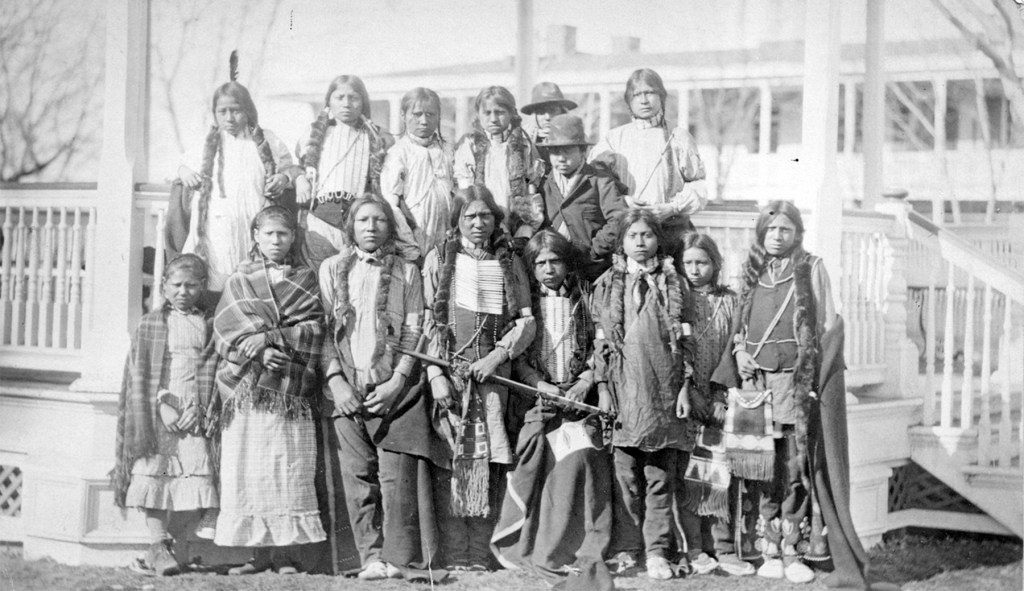
It was no less ruthless on the North American continent, where in subsequent years, thousands of Native American children were forced to attend boarding schools created to strip them of their culture. Many of these schools were run by the Catholic Church, the Episcopal Church and other denominations who were also complicit in the callousness.
I can’t even begin to understand the Native American condition, and I wouldn’t pretend to, yet Warrior’s essay fueled my commitment to being in solidarity with them and their struggle.
Indigenous peoples, and other communities of color may have different experiences of injustice and oppression, and it would be easy to dwell on this cruelty and become overwhelmed with despair.
But we are bound to each other, not only in suffering, but also by a common sense of hope that strives to overcome the distress.
I am reminded of the Apostle Paul’s words to the Christians at Corinth when describing his situation, “We are afflicted in every way, but not crushed; perplexed, but not driven to despair; persecuted, but not forsaken; struck down, but not destroyed.” [2 Corinthians 4:8-9]
In recognizing Indigenous Peoples’ Day, let us, as Americans, acknowledge that the land which we occupy was once inhabited by others who were here long before us, and that we all own a share of the guilt in the unjust acts committed on innocent people, thereby perverting the Christian faith which we profess.
As we beg their forgiveness and God’s forgiveness, may we also commit to act as God’s ambassadors of love and reconciliation.
And we pray:
Ohiŋni wičhauŋkiksuyapi kte. “We will always remember them.”
Dear Lord, Almighty God, we pray for all Indigenous children who were in residential and boarding schools in Canada and the United States. Some died there; we ask that you give assurance to their descendants that their souls are with you and their ancestors. Some survived there; we ask that you give your healing grace to all who endured hardship while there and are still struggling with those memories. Lastly, we ask you to help us guard our children against harm in this world. All this we ask in the name of your Son, Jesus Christ, who lives and reigns with you and the Holy Spirit, now and forever. Amen.
(This prayer was adopted by The Episcopal Church at its 81st General Convention in 2024. It was co-written with Indigenous leaders and parishioners. The Convention also expressed remorse for the role The Episcopal Church played in the irreparable harm suffered by Indigenous children who attended Indigenous boarding and residential schools in the 1800s and 1900s and acknowledges that the effect of that harm carries on in boarding school survivors and their descendants.)
[1]Robert Allen Warrior, “A Native American Perspective: Canaanites, Cowboys, and Indians,” in Voices from the Margin: Interpreting the Bible in the Third World, ed. R. S. Sugirtharajah (Maryknoll, New York: Orbis Books, 1991) pp. 287-295
[2] Warrior, p. 289
[3] Eduardo Galeano, Open Veins of Latin America: Five Centuries of the Pillage of a Continent (New York: Monthly Review Press, 1973, 1977)

