David put his hand in his bag,
[1 samuel 17:49 nrsvue]
took out a stone, slung it,
and struck the Philistine on his forehead;
the stone sank into his forehead,
and he fell face down on the ground.

I confess to knowing next to nothing about soccer.
Even calling it “soccer” is offensive to the majority of civilization.
It is FOOTBALL!
Those of us who live in the United States have been accused by the rest of the world of bastardizing the term to refer to a game in which – heaven forbid – the hands are used to carry the ball.
In the U.S. variety of the sport, the foot rarely comes into contact with the ball, which itself isn’t even round in shape, but a rather oblong oddity that is pointed at two ends.
But which game is really football is a debate for another day.
Our focus in this brief essay is the World Cup.
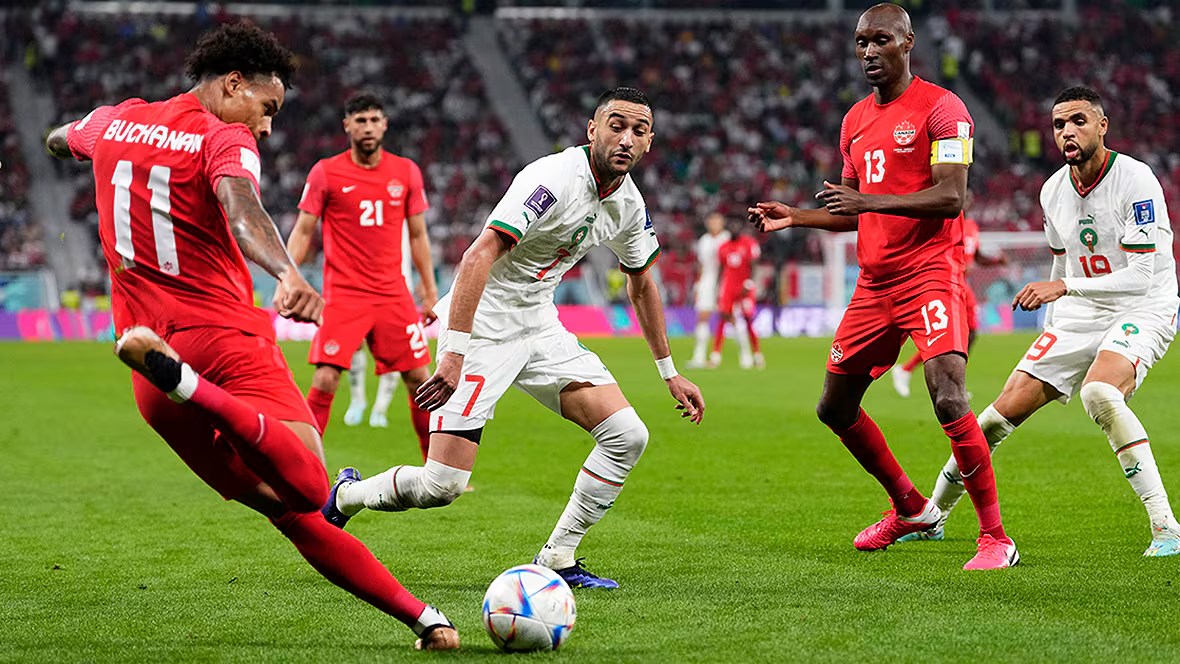
Every four years, a multitude of teams represent their countries in a tournament to ultimately claim soccer superiority. This year there are forty-eight contenders, the largest field in the history of the tournament.
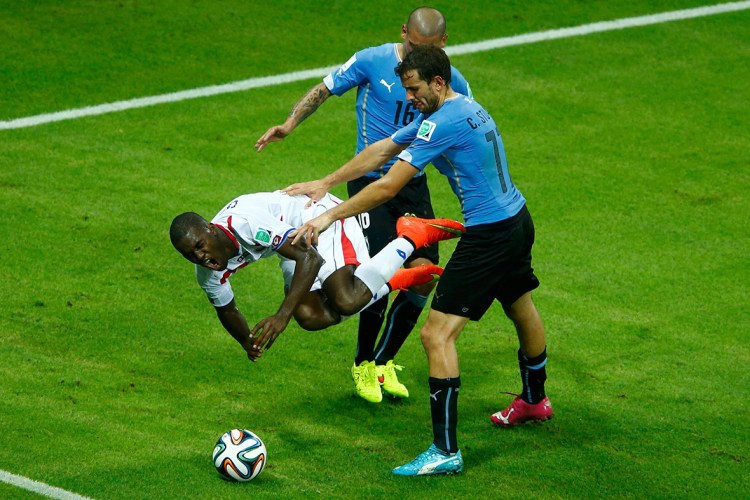
Since June 11, the three major nations of the North American continent have been hosting the World Cup. Also the first time that multiple countries have partnered in the presentation.
As I write this reflection, a third of the field has already been eliminated, and the tournament is now in what is called the “knockout” phase.
On July 19, a champion will be crowned in New York.
Unlike the Olympics, where individuals and teams compete in a myriad of athletic events, the World Cup is strictly a team affair and exclusively one sport.
What is fascinating is that, theoretically, even the tiniest nation has a fighting chance to emerge victorious.
Yes, David can defeat Goliath.
Uruguay proved that – twice – winning the initial World Cup in 1930, and again in 1950. In both cases, only thirteen teams competed in the tournament.
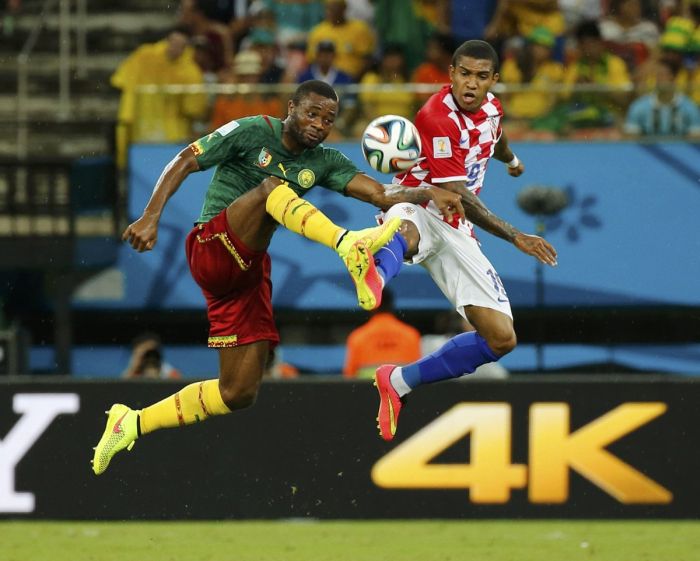
However, that should not diminish the significance of those championships. Their vanquished opponents, Argentina, and Brazil, are both much bigger nations with a presumably greater talent pool from which to select its players.
Throughout this country, in many restaurants and sports bars, the games are a constant fixture on television, where one cannot avoid an occasional glance at the multiple screens.
I have been a casual observer of this tournament, admittedly in hopes of witnessing a miraculous upset.
Otherwise, my life goes on mostly unperturbed.
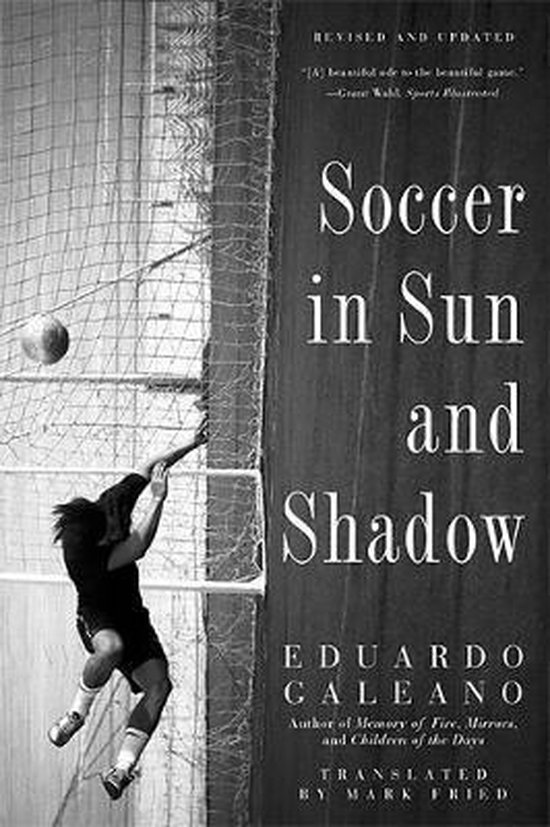
But the games – excuse me, the matches – gave me an excuse to pull down from my bookshelf a brilliant collection of essays by Eduardo Galeano, titled Soccer in Sun and Shadow. (Note that its original Spanish title, El fútbol a sol y sombra, doesn’t mention the “S” word.)
Galeano realized at a very young age that he was not blessed with the physical grace to play a sport that he loved. So he did the next best thing – he wrote about it.
And in words, something with which God endowed him in abundance, he has elevated the game to a mythical plane.
Even in the English translation Galeano’s prose is poetic.
It’s tempting to include an entire essay in this writing, but I offer this paragraph from one of my favorite essays in the book as evidence of his magnificent mastery of language.
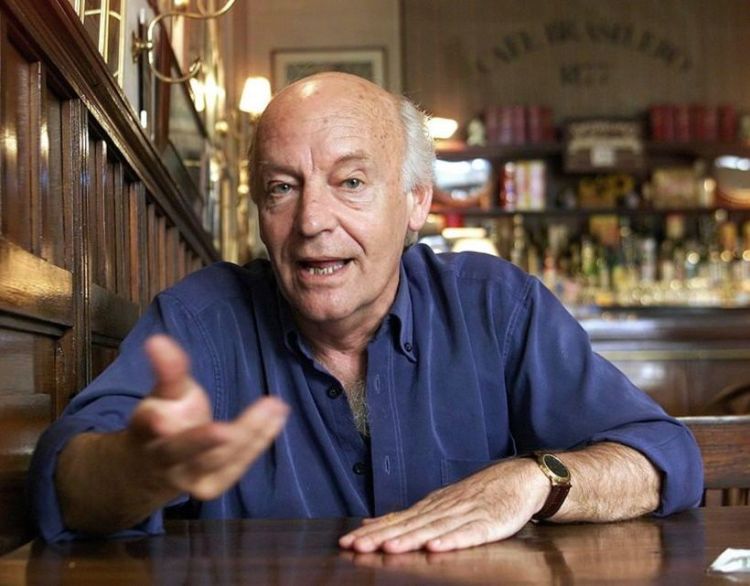
Professional soccer does everything to castrate that energy of happiness, but it survives in spite of all the spites. And maybe that’s why soccer never stops being astonishing. As my friend Ángel Ruocco says, that’s the best thing about it – its stubborn capacity for surprise. The more the technocrats program it down to the smallest detail, the more the powerful manipulate it, soccer continues to be the art of the unforeseeable. When you least expect it, the impossible occurs, the dwarf teaches the giant a lesson, and a runty, bowlegged black man makes an athlete sculpted in Greece look ridiculous. (p. 243)
In just a few words, Galeano manages to capture the beauty of the game.
And though I struggle to figure out the strategy of what is going on in the field, I keep looking for that one play, that one maneuver, that leaves dedicated football fans gasping in breathless amazement.
I’m not sure that I’ll ever devote two hours or more of a day to sit and watch a game in its entirety, yet I appreciate the joy that it brings to those who do.
Most importantly, I am ever grateful for the unity that it creates among people who would otherwise not have any reason to come together; and the harmony that is generated among rivals who, despite their differences, are able to play a sport against each other, respecting the rules of the game as well as each other.
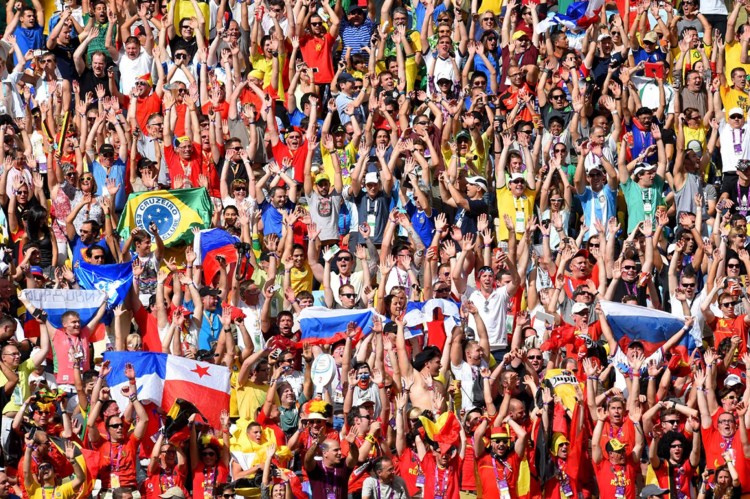
Imagine what would be if the world’s conflicts were resolved in this way, instead of with guns and bombs and other weapons of destruction.
Galeano’s essay also contains one of my favorite quotes, which I’ve used many times before and with which I’ll close this reflection.
A reporter once asked German theologian Dorothee Sölle, “How would you explain happiness to a child.”
“I wouldn’t explain it,” she answered. “I’d toss him a ball and let him play.”
And we pray:
Eternal God, in whose perfect kingdom no sword is drawn but the sword of righteousness, no strength known but the strength of love: So mightily spread abroad your Spirit, that all peoples may be gathered under the banner of the Prince of Peace, as children of one Father; to whom be dominion and glory, now and for ever. Amen.
(Book of Common Prayer, p. 815)


I enjoyed this very much; thank you! Like you said, the Olympics and the World Cup brings (theoretically) all the nations of the world together and we are better for it, perhaps leaving with a better understanding of other cultures, languages, and peoples. Though I have a litany of complaints about the rules of the game, it is, in the end, a beautiful game to watch.
LikeLiked by 1 person
Even though I’m not knowledgeable about the game, I’m aware of how much technology is becoming an unwelcome intrusion. Video assistant referee, for example, is undermining the human element and disrupting the flow of the game.
I’ve always appreciated the ability of sports to break down barriers.
LikeLiked by 1 person