
Then Peter came and said to [Jesus] “Lord, if another member of the church sins against me, how often should I forgive? As many as seven times?”
[Matthew 18:21-22 nrsvue]
Jesus said to him, “Not seven times, but, I tell you, seventy-seven times.
I am posting this reflection on Wednesday, September 9, 2026.
In two more days, the nation will commemorate the twenty-fifth anniversary of the destruction of the World Trade Center, what we have come to know as simply 9/11.
I’ve written my thoughts about this day several times. I’ll make every effort here not to rehash what I’ve said before. If you’re interested, here are the links to my previous posts on this day (click on the title to access):
| September 5, 2011 | Where Were You? |
| September 11, 2017 | Monday Musings |
| September 7, 2021 | Divine Things – Human Things |
| September 12, 2025 | Conquer Killing with Kindness |
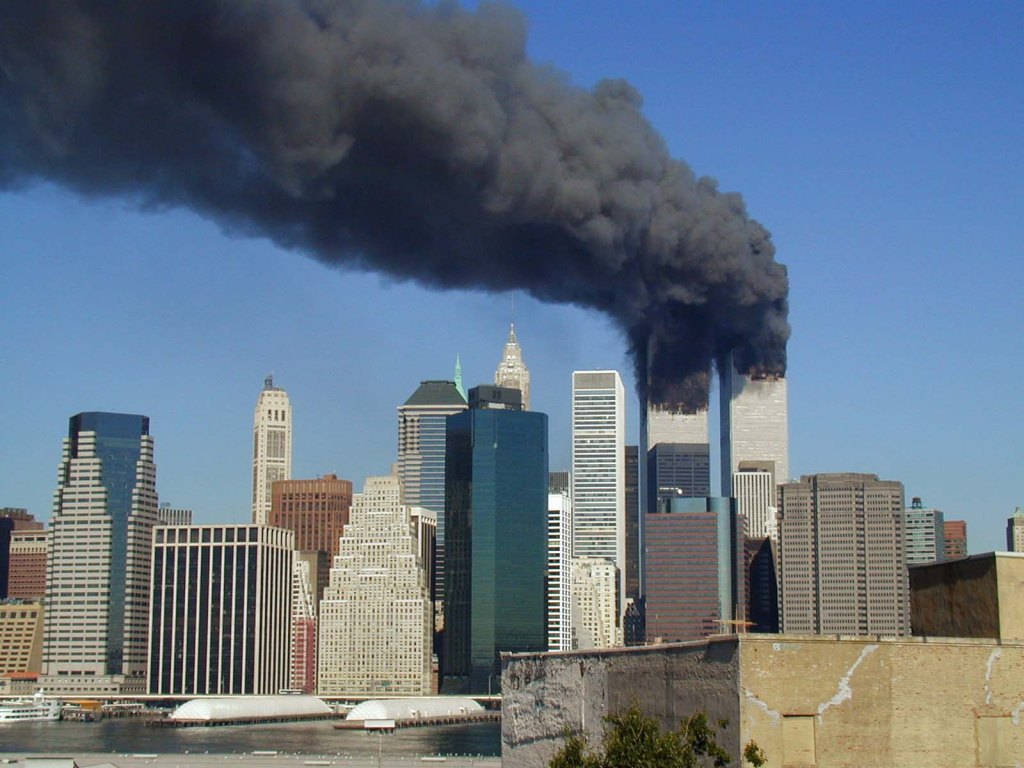
I would imagine there are many people who still harbor the anger, resentment, and sadness of that day twenty-five years ago.
Those that were directly affected, who lost loved ones, who rushed in to rescue the survivors, or to recover the bodies of the victims, remember it much more vividly and to a much deeper and more authentic level than those of us who were far removed from the tragedy.
I can’t speak for others, but this 25th remembrance is unsettling to me.
It’s unsettling because, as I gauge the mood of this country, I sense that in today’s society there are those who clamor for vengeance much more strongly than the ones who genuinely suffered.
Though it is a distant memory, the commemoration for them becomes an excuse to justify retributive violence and cruelty on others.
I thought about this as I pondered the Gospel reading for this coming Sunday in which Jesus talks to Peter about forgiveness and the need to forgive unconditionally and without limits.
Forgiveness is obviously a tall order for us as humans.
It’s not in our nature to be forgiving when someone has wronged us.
Forgiveness is too often interpreted as a sign of weakness.
But pause for a moment and consider the following words from the Lord’s Prayer:
Forgive us our trespasses, as we forgive those who trespass against us.
Many of us say those words almost daily, but I would venture to guess that very few have ever thought deeply about them.
Part of the problems is that we don’t really understand the word “trespass.”
For that, we have the Church of England to thank.
In the 1662 Book of Common Prayer, it was decided to insert the phrase “forgive us our trespasses” into the Lord’s Prayer even though in Matthew’s Gospel, Jesus uses the phrase “forgive us our debts.” (Matthew 6:12) He uses trespasses a couple verses later. (Matt. 6:14)
And to make things a little more confusing, in Luke, we read “forgive us our sins.” (Luke 11:4)
Today, a modern language version of the Lord’s Prayer more appropriately reads:
Forgive us our sins, as we forgive those who sin against us.
But whether trespasses, debts, or sins, the key word is FORGIVE.
In the Gospel reading, Jesus answers Peter’s question with a parable that we have come to know as “The Parable of the Unforgiving Servant.” (Matthew 18:21-35)
The servant is forgiven a huge debt, but then turns around and refuses to forgive another servant of a much smaller debt. As punishment for being unforgiving, the first servant is tortured.
In essence, when we forgive others we liberate them from their sins and failures, unshackle them from the chains of anxiety, guilt, and shame, and point them toward a future of hope, instead of a past of regret.
Perhaps even more important, when we forgive others we liberate our own selves from feelings of bitterness, resentment, or vengeance; feelings that will corrode our souls as surely as any wrong we have committed.
I once heard someone say that. “to harbor bitterness and resentment is like drinking poison and expecting the other person to die.”
By forgiving we refuse to allow past actions and failures to define our future.
And yes, forgiving requires risk – the risk of being misunderstood, the risk of being rejected, the risk of leaving yourself vulnerable.
But this is the same risk that God takes every day with each and every one of us, and the risk that God showed when He sent his only Son to die on the cross to forgive our sins.
So on this Friday, as we remember 9/11, we remember all those affected by the attack, those who perished, their families and loved ones, those who came to their aid.
May that memory inspire us to commit to living in peace and harmony with each other, trusting in God’s love for all of us.
And we pray:
O God, you have bound us together in a common life. Help us, in the midst of our struggles for justice and truth, to confront one another without hatred or bitterness, and to work together with mutual forbearance and respect; through Jesus Christ our Lord. Amen.
(Book of Common Prayer, p. 824)
Featured Image: 9/11 Memorial Reflecting Pool, New York


One of the best things I have ever read about forgiveness! Thanks
LikeLiked by 1 person
Thank you for the affirmation, Blair!
LikeLike