[Jesus said:] “For the kingdom of heaven is like a landowner who went out early in the morning to hire laborers for his vineyard. After agreeing with the laborers for a denarius for the day, he sent them into his vineyard.”
[matthew 21:1-2 nrsvue]
Note: Again this week, I’m reworking a reflection I originally wrote in 2017, while I was in the office of Bishop, for my weekly Monday Musings column. (The underlined title is the link to the original) I’ve made a few updates, but the opinion largely remains the same.
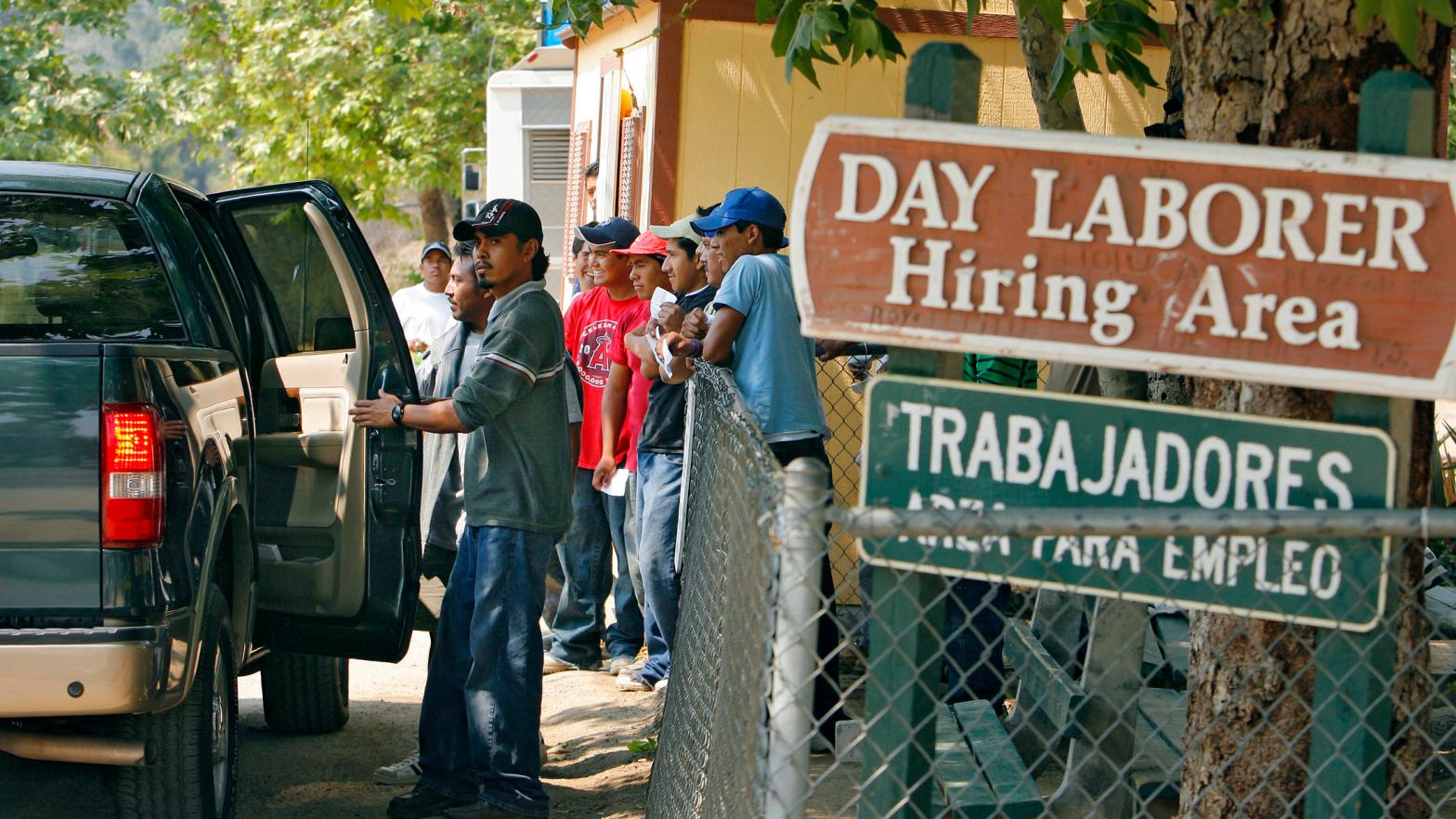
The Gospel reading for this coming Sunday, September 20, 2026, (Matthew 20:1-16) immediately conjures up images in my mind of men waiting on a corner somewhere in the world, for work that will help support them and their family for that day.
There has always been a need for temporary labor everywhere, so these scenes are not unique to any nation.
What is also common in most countries is that the bulk of these day laborers are foreigners.
When I was in South Africa in 2016, I was told the bulk of the men I saw waiting on street corners there were from Zimbabwe.
Foreign-born workers, especially from Mexico and Central America, are currently the core of the low-wage workforce in southern California (see feature photo above), as well as other parts of the United States.
Of course, those scenes have changed in this country.
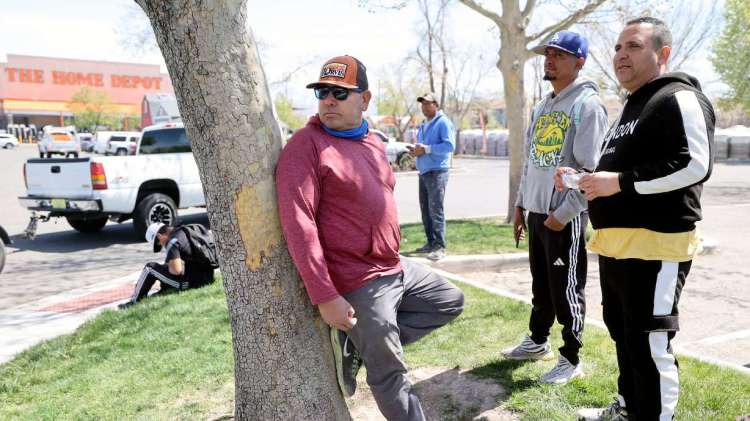
The Home Depot parking lots where they once gathered are now mostly empty because of the increasingly harsh and inhumane anti-immigrant campaign that is currently being waged by the President and his administration, chiefly through the Department of Homeland Security and its draconian Immigration and Customs Enforcement (ICE) goon squads.
That flies in the face of the Evangelical Lutheran Church in America’s Social Policy Resolution, Toward Compassionate, Just, and Wise Immigration Reform (2009), which commits the church to protect the rights of people at work.
The resolution goes on to state that:
New legislation should facilitate an orderly, regulated future flow of workers, consistent with America’s labor needs and obligations, to contribute to the global common good.
Of course, those type of commitments require legislation which our representatives in Washington lack the will to propose.
At the risk of generalizing, the people one sees on a street corner are mainly male, young, and low skilled.
What is also to be expected is that they will earn low and uncertain levels of income and work under less than ideal conditions.
They are also vulnerable to theft of wages, employer abuse, and lack of insurance in the case of a work-related accident or injury.
Since many lack documentation, their work sites are also targets of the previously mentioned aggressive immigration enforcement.
In recent years, there has been an increase in efforts by labor unions, and community action groups and agencies to organize these workers so that they will not lack these benefits.
However, there still exists a level of distrust of these organizations, no matter how reputable they may be.
So, the day laborer on the corner is not bound to go away anytime soon. The fear of taking jobs from people who need them is overstated.
Yet those of us with a steady job and a suitable income tend to look down on such persons. Our reaction is either one of resentment or silence.
The resentment stems mostly from the fact that they are foreign-born, mainly, Latino.
Each election campaign gives rise to an even more rancorous and fearmongering anti-immigrant rhetoric that has had the intended results – the vilifying of Muslims, the vandalism of synagogues, the repeal of Temporary Protective Status (TPS), among others.
Is it possible that questions raised about immigrant issues have a deeper source than we are willing to admit—not our needs, but our wants and desires?
The Gospel reading asks us to search our hearts for our inner motivations.
Note the words with which our story begins. Jesus said, “For the kingdom of heaven is like…”
When Jesus speaks of God’s kingdom, he’s not talking about some geographical faraway place beyond the here and now, but rather, about life lived on this earth under the reign of God –
- a God who is generous to a fault,
- a God whose generosity offends us and baffles us;
- a God who is inclined to show special generosity to the poor and outcast;
- a God who makes the so-called “respectable” people to become anxious and nervous.
These are the thoughts that Matthew’s Gospel invites us to wrestle with this week.
And we pray:
O God, you made us in your own image and redeemed us through Jesus your Son: Look with compassion on the whole human family; take away the arrogance and hatred which infect our hearts; break down the walls that separate us; unite us in bonds of love; and work through our struggle and confusion to accomplish your purposes on earth; that, in your good time, all nations and races may serve you in harmony around your heavenly throne; through Jesus Christ our Lord. Amen.
(Book of Common Prayer, p. 815)

